Camping offers a unique opportunity to connect with nature, but it also comes with responsibility. Beginners often focus on comfort and gear while overlooking the environmental impact of their activities. Eco-friendly camping ensures that natural areas remain clean, safe, and enjoyable for future visitors.
This guide explains simple and practical eco-friendly camping tips that beginners can easily follow.
Why Eco-Friendly Camping Matters
Natural environments are fragile and can be easily damaged by careless behavior.
Responsible camping:
- Protects wildlife and ecosystems
- Preserves natural beauty
- Reduces pollution and waste
- Ensures campsites remain open and accessible
Eco-friendly habits benefit both campers and nature.
Follow the “Leave No Trace” Principles
The foundation of eco-friendly camping is leaving no trace of your presence.
Core principles include:
- Take all trash with you
- Avoid damaging plants or trees
- Camp only in designated areas
- Minimize campfire impact
Leaving no trace helps preserve natural spaces.
Reduce Waste While Camping
Waste reduction starts with planning.
Simple waste-reduction tips:
- Bring reusable containers
- Avoid single-use plastics
- Pack food with minimal packaging
- Use refillable water bottles
Reducing waste makes cleanup easier and protects wildlife.
Use Eco-Friendly Camping Products
Choosing environmentally friendly products reduces harm.
Recommended eco-friendly items:
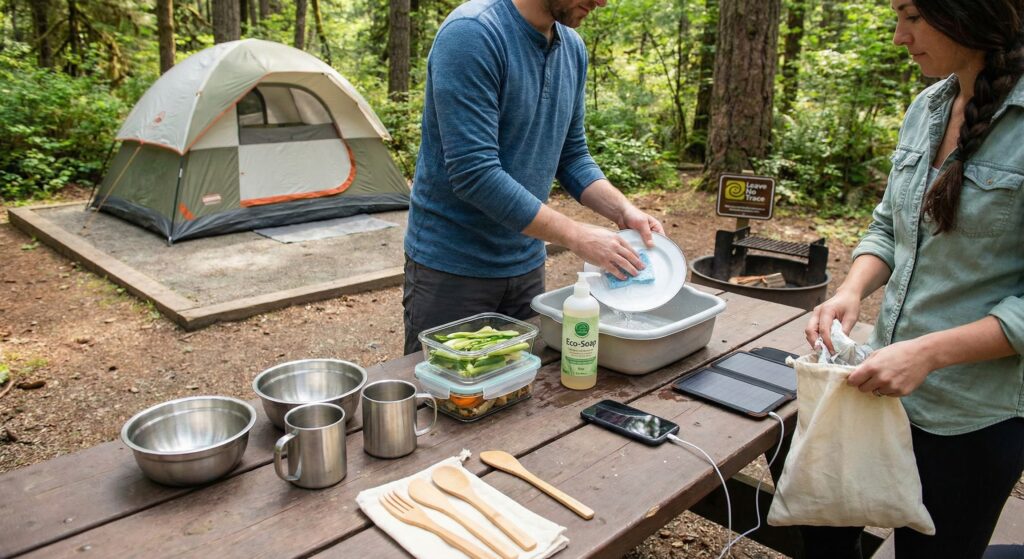
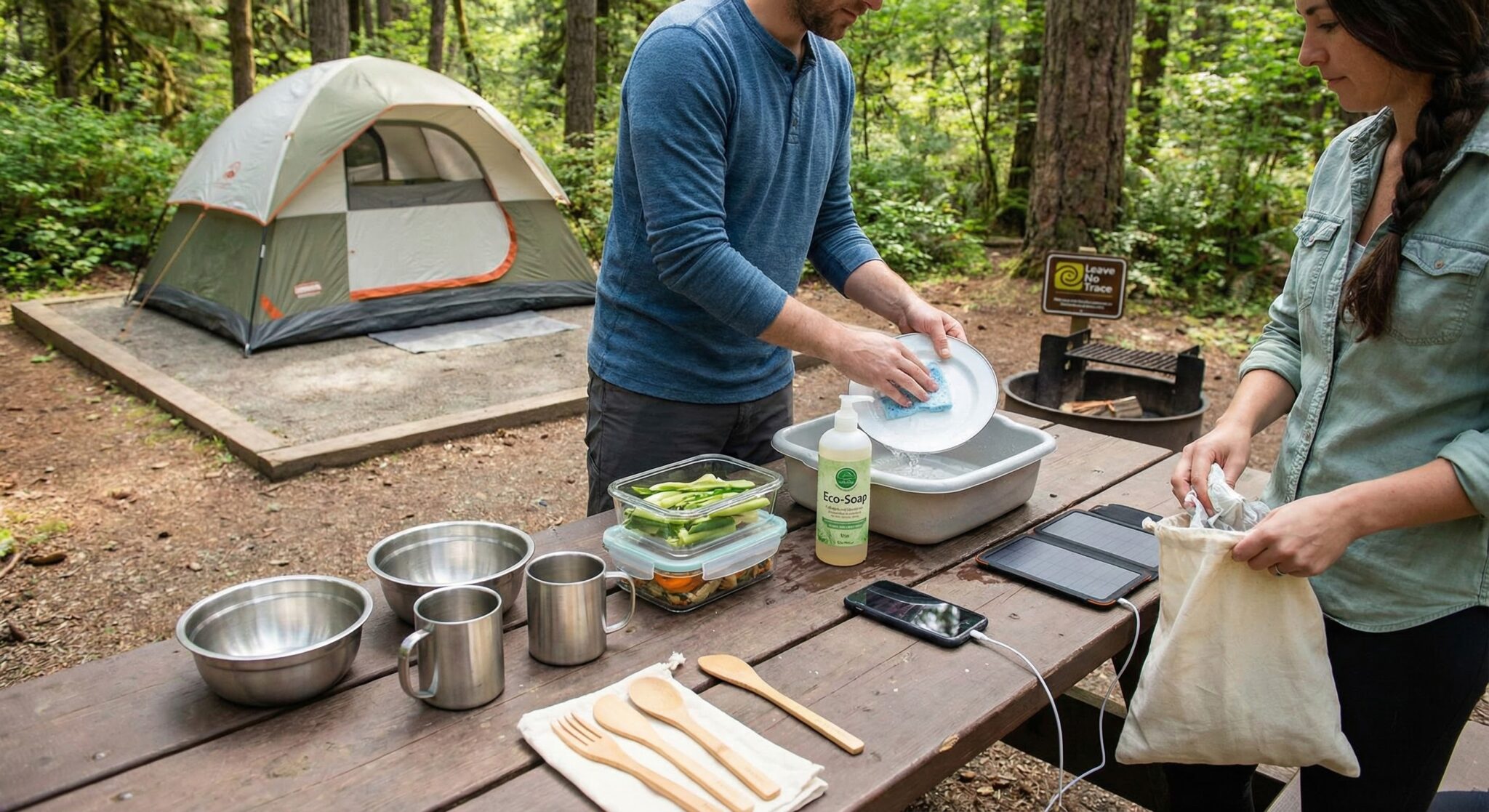
- Biodegradable soap and wipes
- Reusable utensils and plates
- Rechargeable batteries
- Solar-powered chargers
Small product choices make a big difference.
Respect Wildlife and Natural Habitats
Wildlife should be observed, not disturbed.
Responsible practices:
- Never feed animals
- Keep a safe distance
- Store food securely
- Avoid loud noises
Respecting wildlife ensures safety and ecological balance.
Minimize Campfire Impact
Campfires can damage the environment if misused.
Eco-friendly fire tips:
- Use existing fire rings
- Keep fires small
- Use local firewood only
- Fully extinguish fires
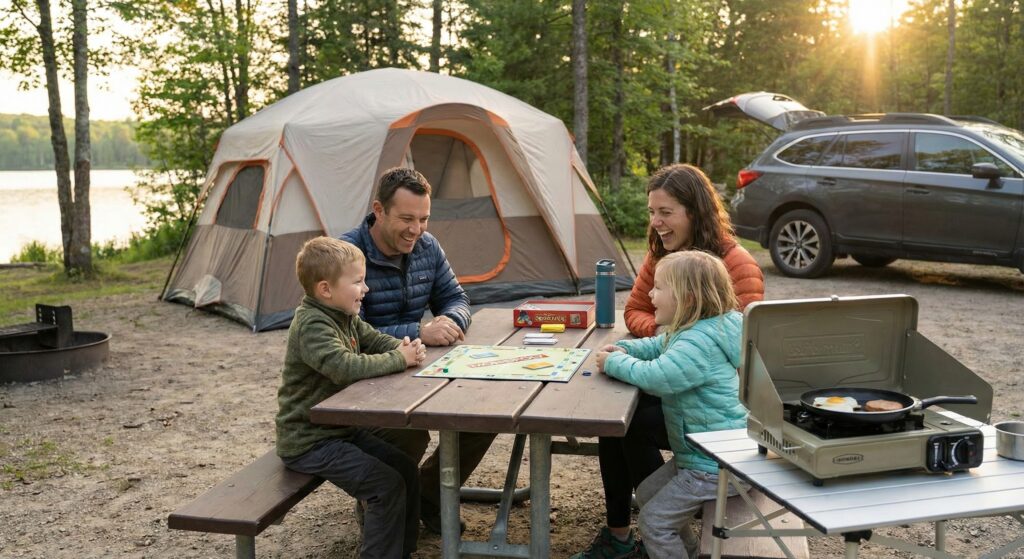
Where fires are restricted, use portable stoves instead.
Conserve Water and Energy
Resources are limited in outdoor environments.
Conservation tips:
- Use water sparingly
- Turn off devices when not needed
- Avoid unnecessary lighting
- Plan efficient meal preparation
Conserving resources reduces environmental impact.
Choose Sustainable Campsites
Where you camp matters.
Sustainable campsite choices include:
- Designated camping areas
- Durable surfaces
- Sites away from fragile ecosystems
Responsible site selection protects sensitive areas.
Practice Responsible Waste Disposal
Improper waste disposal harms nature.
Guidelines:
- Pack out all trash
- Dispose of waste at approved facilities
- Never bury trash or food waste
Responsible disposal keeps campsites clean.
Teach Eco-Friendly Habits to Others
Camping is an opportunity to educate.
Encourage:
- Environmental awareness
- Respect for nature
- Responsible behavior
Teaching others multiplies positive impact.
Common Eco-Friendly Mistakes Beginners Make
Beginners often:
- Leave food scraps behind
- Use non-biodegradable products
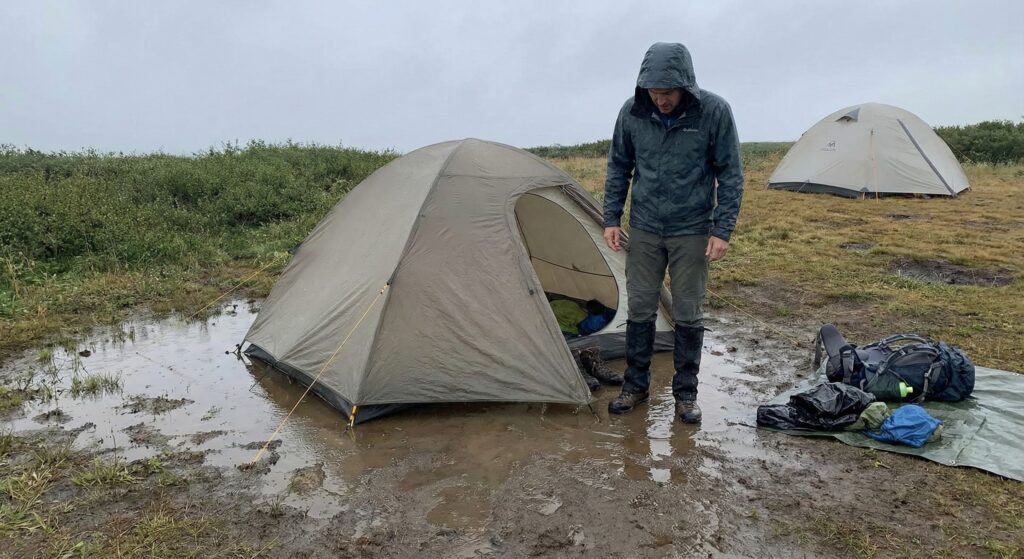
- Camp in restricted areas
- Ignore local regulations
Awareness helps avoid these mistakes.
Frequently Asked Questions
Is eco-friendly camping expensive?
No. Many eco-friendly habits reduce costs by minimizing waste.
Can beginners practice eco-friendly camping?
Yes. Simple actions make a meaningful difference.
Are campfires always harmful?
No, but they must be managed responsibly and legally.
Conclusion
Eco-friendly camping is about respect, awareness, and responsibility. Beginners who adopt sustainable practices help protect nature while enjoying a cleaner, safer camping experience.
By following these eco-friendly camping tips, campers ensure that natural spaces remain beautiful and accessible for future generations.