Camping in rainy weather can seem intimidating for beginners, but with proper preparation and the right mindset, it can be a manageable and even enjoyable experience. Rain does not have to ruin a camping trip—many challenges can be avoided by planning ahead and using suitable gear.
This guide explains how beginners can camp safely and comfortably in rainy weather.
Is Camping in the Rain Safe?
Camping in the rain is generally safe if proper precautions are taken.
Safety depends on:
- Campsite selection
- Weather intensity
- Quality of gear
- Awareness of surroundings
Beginners should avoid camping during severe storms or weather warnings.
Choose the Right Campsite in Rainy Conditions
Location selection becomes even more important when rain is expected.
Best campsite features:
- Elevated ground
- Good natural drainage
- Distance from rivers or streams
- No signs of flooding
Never camp in dry riverbeds or low-lying areas.
Use a Waterproof Tent and Rainfly
A waterproof shelter is essential.
Key tent features for rainy weather:
- Fully sealed seams
- Waterproof rainfly
- Groundsheet or footprint
- Proper ventilation
Always test your tent at home before relying on it in wet conditions.
Set Up Your Tent Correctly
Proper setup prevents water from entering your shelter.
Setup tips:
- Tighten guylines securely
- Angle the rainfly correctly
- Avoid touching tent walls from inside
- Create a small trench if allowed (check local rules)
A well-pitched tent makes a major difference in rainy conditions.
Stay Dry With Proper Clothing
Wet clothing quickly leads to discomfort and cold.
Recommended rain clothing:
- Waterproof jacket
- Rain pants
- Quick-drying layers
- Extra socks
Avoid cotton clothing, which retains moisture.
Protect Your Gear From Moisture
Keeping equipment dry is essential.
Gear protection tips:
- Use waterproof bags or liners
- Store items off the ground
- Keep electronics sealed
- Separate wet and dry gear
Dry gear improves comfort and safety.
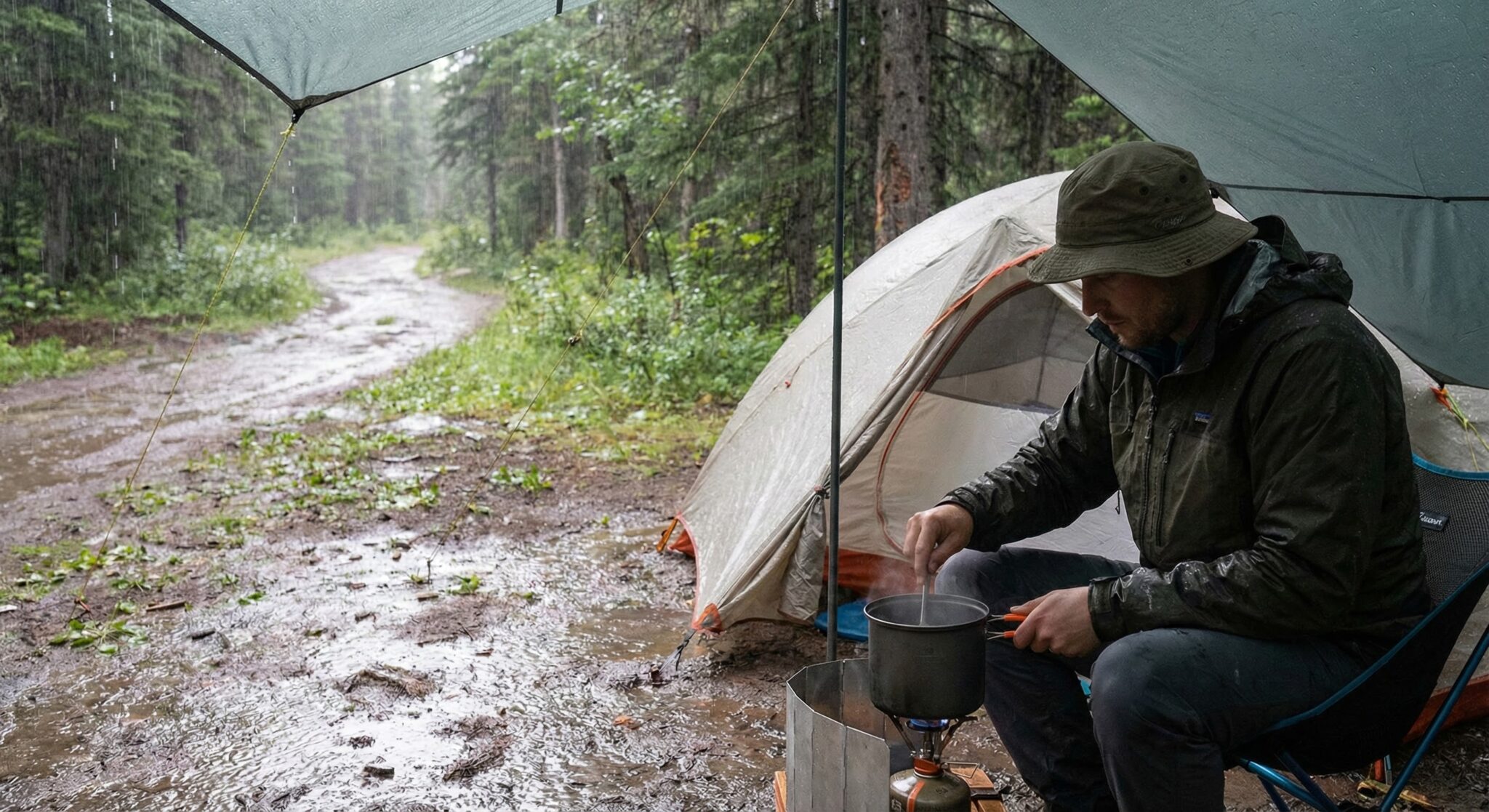
Cooking and Eating in the Rain
Rain complicates meal preparation.
Helpful strategies:
- Use a tarp or shelter for cooking
- Prepare simple meals
- Avoid open flames in heavy rain
- Keep food sealed
Plan meals that require minimal preparation.
Manage Condensation Inside the Tent
Rain often increases humidity inside tents.
Reduce condensation by:
- Maintaining ventilation
- Avoiding wet items inside
- Using a microfiber cloth to wipe moisture
Ventilation prevents dampness and discomfort.
Nighttime Safety in Rainy Weather
Rain reduces visibility and increases risks at night.
Safety tips:
- Use headlamps or lanterns
- Keep paths clear
- Avoid walking far from camp
- Monitor weather conditions
Staying organized reduces nighttime hazards.
Common Mistakes Beginners Make When Camping in Rain
Typical mistakes include:
- Choosing low-lying campsites
- Failing to waterproof gear
- Wearing cotton clothing
- Ignoring weather updates
Avoiding these mistakes improves the experience significantly.
Frequently Asked Questions
Should beginners camp in the rain?
Yes, light rain is manageable with preparation. Severe weather should be avoided.
Can tents handle heavy rain?
Quality tents with proper setup can handle significant rainfall.
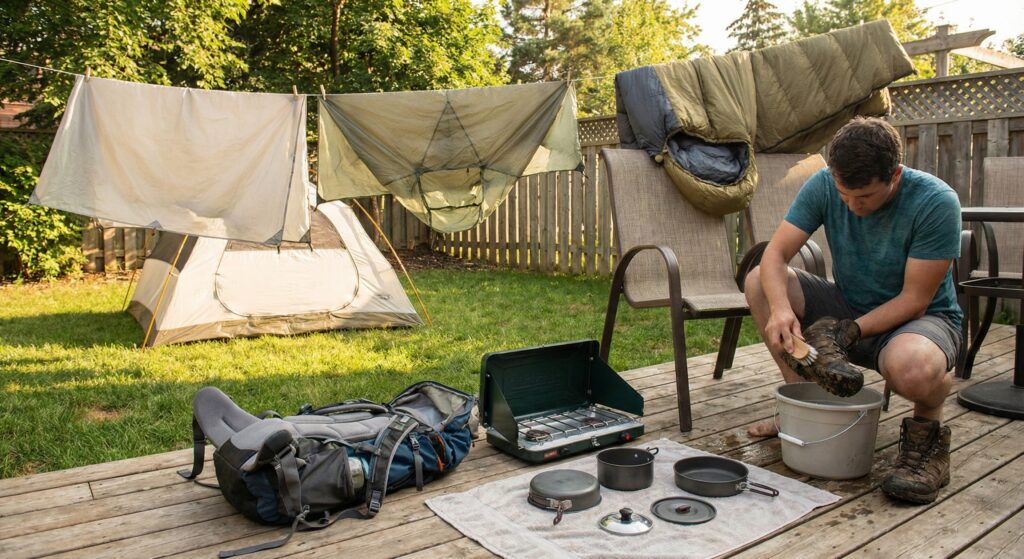
How do I dry wet gear?
Air-dry gear whenever possible and keep it ventilated.
Conclusion
Camping in rainy weather requires additional preparation, but it does not need to be stressful. With the right campsite, proper shelter, suitable clothing, and smart habits, beginners can stay dry, safe, and comfortable even in wet conditions.
Rainy weather camping can become a valuable learning experience that builds confidence and skills.