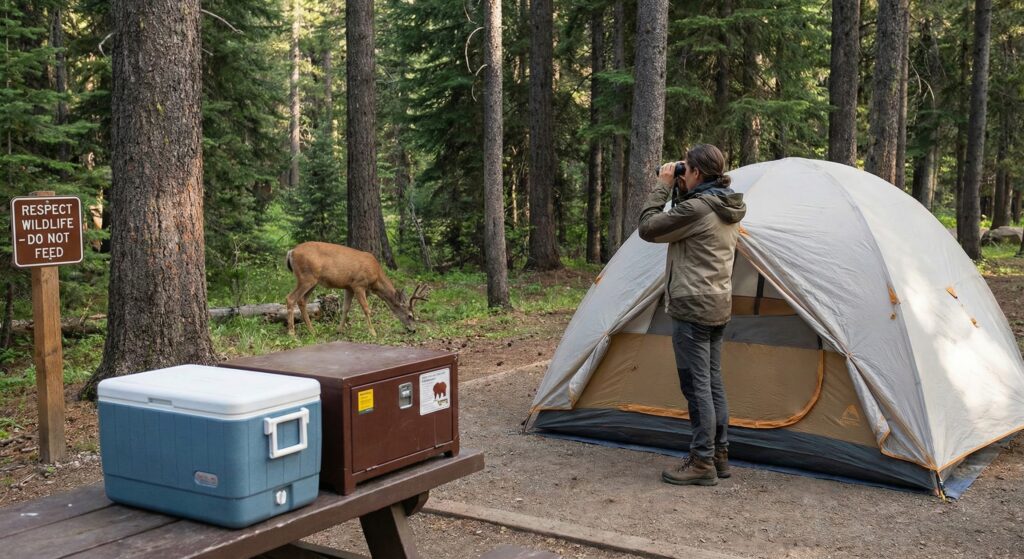
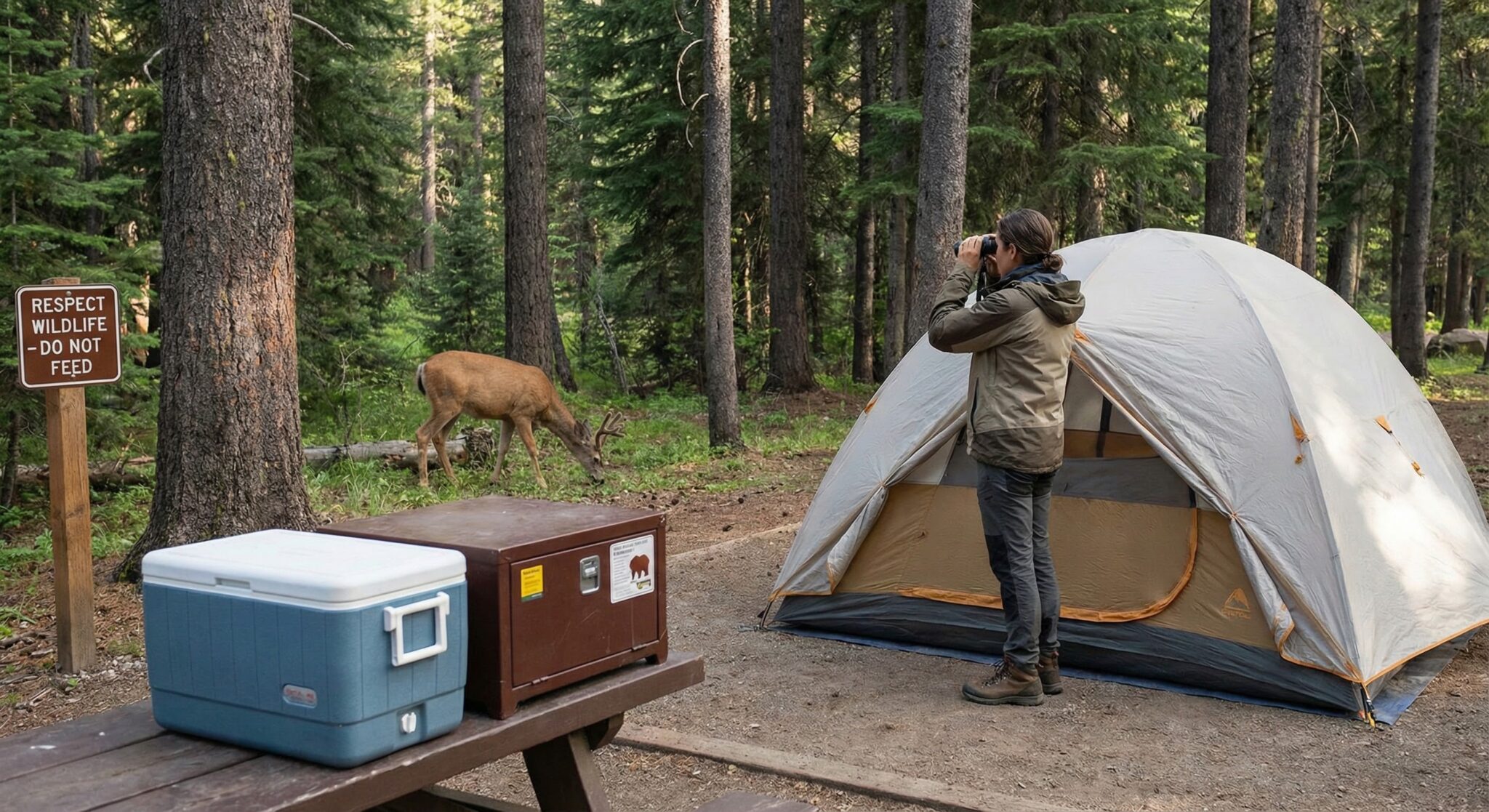
Encountering wildlife is one of the most exciting and sometimes intimidating parts of camping. Beginners often worry about what to do if they see animals near their campsite or on hiking trails. While wildlife encounters are usually harmless, knowing how to respond calmly and correctly is essential for safety.
This guide explains what beginners should do if they encounter wildlife while camping, helping ensure safety for both people and animals.
Why Wildlife Encounters Happen While Camping
Camping takes place in natural habitats where animals live.
Wildlife encounters happen because:
- Campers enter animals’ natural environments
- Food smells attract animals
- Campsites are near water or vegetation
Seeing wildlife is normal and does not automatically mean danger.
Stay Calm and Observe From a Distance
The most important rule during any wildlife encounter is to remain calm.
Best practices:
- Do not panic or run
- Avoid sudden movements
- Observe quietly from a safe distance
Most animals will leave on their own if they do not feel threatened.
Never Feed Wild Animals
Feeding wildlife creates serious risks.
Why feeding is dangerous:
- Animals lose natural foraging behavior
- Animals may become aggressive
- Future campers face increased risk
Never offer food, even to animals that appear friendly.
Secure Food and Scented Items Properly
Food storage is one of the biggest factors in wildlife encounters.
Storage tips:
- Use sealed containers
- Store food away from sleeping areas
- Never keep food inside tents
Proper storage greatly reduces animal visits.
What to Do if Small Animals Approach
Small animals such as squirrels or raccoons are common.
If small animals appear:
- Do not approach or chase them
- Secure food immediately
- Make yourself visible without threatening
Small animals can still bite or scratch if provoked.
What to Do if You Encounter Larger Wildlife
Larger animals require extra caution.
General rules:
- Keep a safe distance
- Do not block escape routes
- Slowly back away if necessary
Avoid eye contact and remain calm.
Make Your Presence Known When Appropriate
Surprising animals can increase risk.
Helpful habits:
- Make noise while hiking
- Talk calmly when animals are nearby
- Avoid sneaking up on wildlife
Animals prefer to avoid humans when aware of their presence.
Protect Children and Pets
Children and pets are more vulnerable during wildlife encounters.
Safety steps:
- Keep children close
- Keep pets leashed
- Never allow pets to chase animals
Supervision reduces the risk of sudden reactions.
Follow Campsite Wildlife Guidelines
Many campsites have specific wildlife rules.
Always:
- Read posted signs
- Follow ranger instructions
- Respect local regulations
Local rules are based on area-specific risks.
What Not to Do During Wildlife Encounters
Avoid these common mistakes:
- Running away
- Screaming
- Taking close-up photos
- Trying to scare animals aggressively
Calm behavior prevents escalation.
When to Leave the Area
Sometimes the safest choice is to leave.
Leave the area if:
- Animals show aggressive behavior
- Wildlife remains too close
- You feel unsafe
Relocating is a responsible decision, not a failure.
Common Wildlife Encounter Mistakes Beginners Make
Beginners often:
- Leave food unsecured
- Approach animals for photos
- Underestimate small animals
Awareness prevents these issues.
Frequently Asked Questions
Are wildlife encounters dangerous?
Most are harmless when handled calmly and responsibly.
Should I carry wildlife deterrents?
Beginners usually do not need special deterrents if they follow basic rules.
Is it safe to camp in wildlife areas?
Yes, when campsite guidelines and safety practices are followed.
Conclusion
Wildlife encounters are a natural part of camping and should be approached with respect and caution. Beginners who stay calm, store food properly, and follow campsite rules can safely enjoy nature without harming animals or themselves.
Understanding how to respond to wildlife encounters makes camping safer, more educational, and more rewarding.