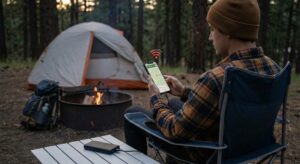
Staying connected while camping is important for navigation, safety, and emergencies. Beginners often worry about how to keep their phones charged when there is no access to electricity. Fortunately, there are several reliable and beginner-friendly solutions.
This guide explains practical ways to charge your phone while camping without compromising safety or simplicity.
Why Phone Charging Matters While Camping
Even if camping is about disconnecting, phones still serve essential purposes:
- Navigation and maps
- Emergency communication
- Weather updates
- Flashlight and camera use
A dead phone can quickly become a safety issue.
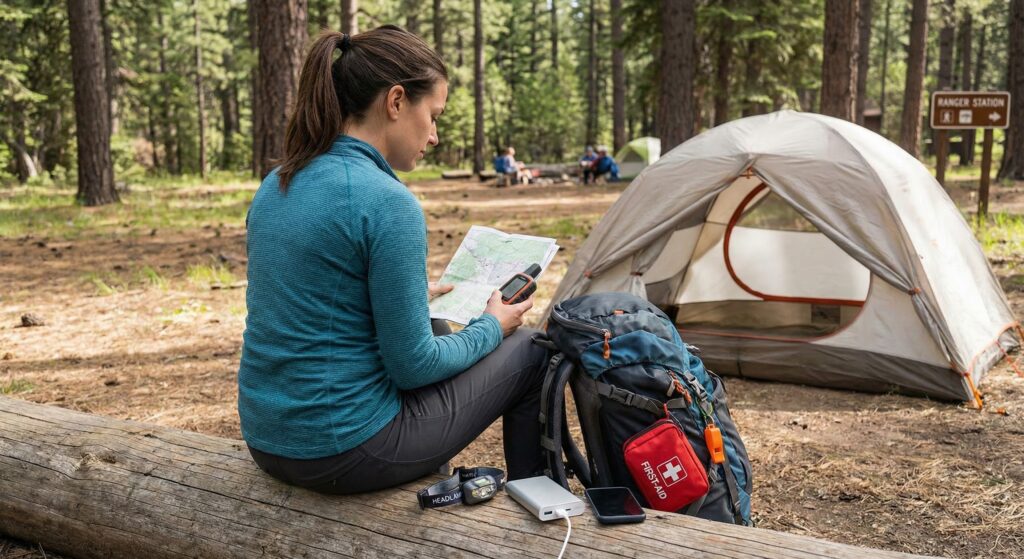
Power Banks: The Easiest Solution
Power banks are the most common and beginner-friendly option.
Advantages:
- Portable and lightweight
- Easy to use
- No setup required
Tips for beginners:
- Choose high-capacity power banks
- Fully charge them before your trip
- Bring charging cables
Power banks are ideal for short camping trips.
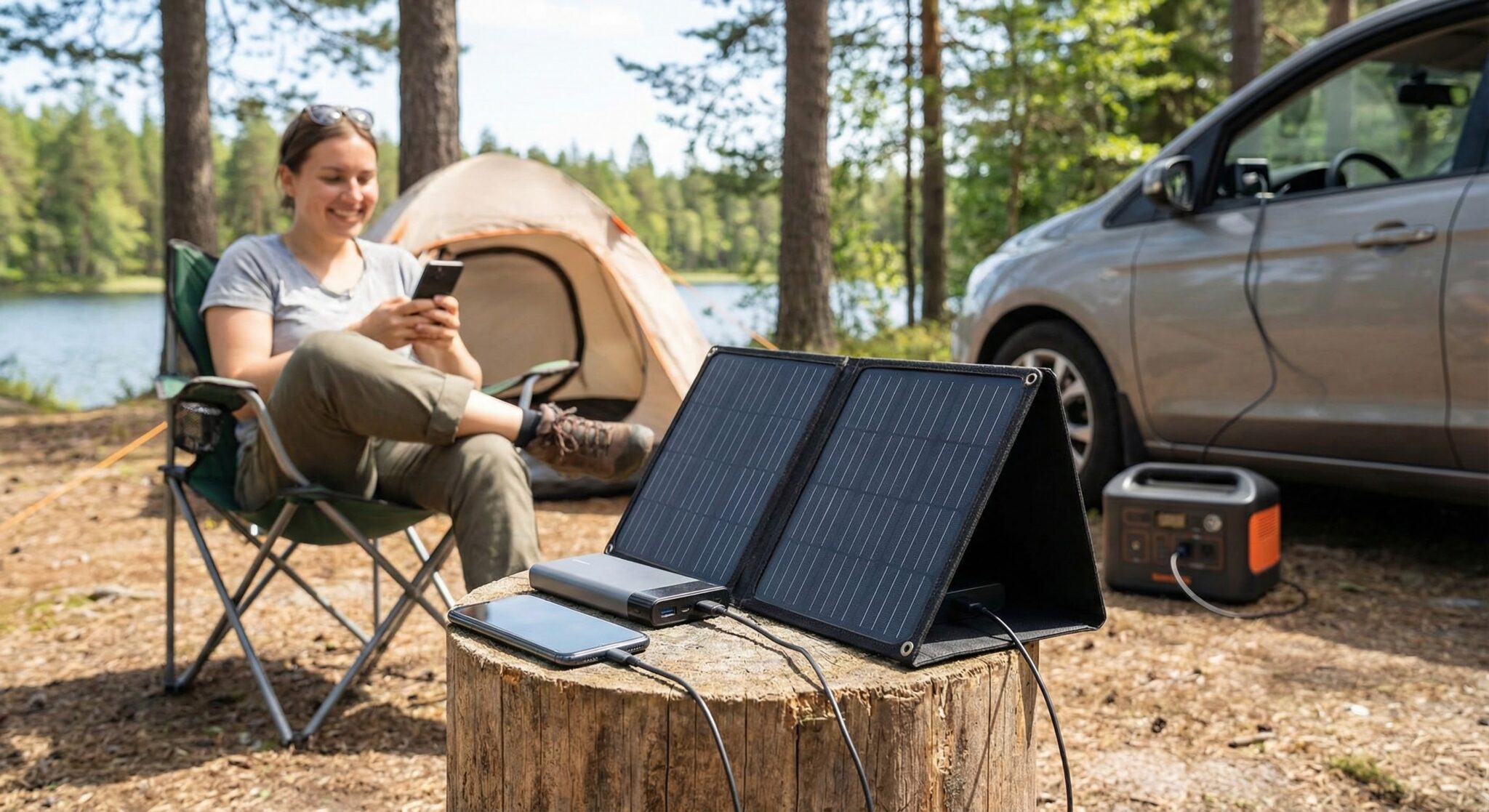
Solar Chargers: Using the Sun’s Energy
Solar chargers are useful for longer stays.
Benefits:
- Renewable energy source
- Useful in sunny conditions
- Reduces reliance on power banks
Limitations:
- Slower charging
- Less effective in cloudy weather
Solar chargers work best when combined with a power bank.
Car Charging Options
Car camping allows additional charging solutions.
Options include:
- Car USB ports
- Car chargers via cigarette lighter
- Charging while driving
This method is convenient but depends on vehicle access.
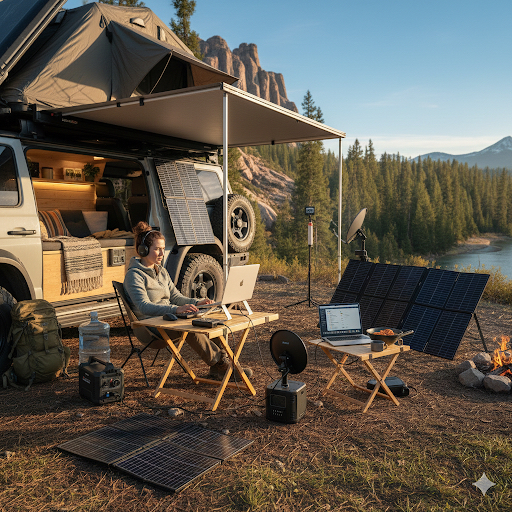
Portable Power Stations
Portable power stations provide higher capacity.
Features:
- Multiple charging ports
- Can charge phones and small devices
- Rechargeable via wall outlet or solar panel
These are suitable for campers who bring multiple devices.
Battery Management Tips
Managing phone usage helps extend battery life.
Best practices:
- Enable power-saving mode
- Reduce screen brightness
- Close unused apps
- Use airplane mode when possible
Efficient usage reduces charging frequency.
Charging Safety While Camping
Safety should never be overlooked.
Important safety tips:
- Keep devices dry
- Avoid charging in rain
- Use quality cables and chargers
- Never use damaged equipment
Safe charging practices prevent accidents.
When You Should Avoid Using Your Phone
Reducing phone usage preserves battery life.
Avoid:
- Unnecessary streaming
- Excessive social media use
- Background apps
Prioritize essential phone functions.
Common Charging Mistakes Beginners Make
Typical mistakes include:
- Bringing insufficient power capacity
- Forgetting charging cables
- Relying on a single charging method
- Ignoring weather conditions
Planning prevents these issues.
Frequently Asked Questions
Is it safe to charge phones in a tent?
Yes, as long as equipment is dry and properly ventilated.
How many power banks should I bring?
One high-capacity power bank is usually sufficient for short trips.
Are solar chargers reliable?
They are helpful but should not be your only power source.
Conclusion
Charging your phone while camping is easier than many beginners expect. With power banks, solar chargers, and smart battery management, staying connected and prepared is simple and safe.
Proper planning ensures your phone remains a useful tool rather than a source of stress during your camping trip.