Choosing the right camping location is one of the most important decisions for a successful outdoor experience. Beginners often focus on gear and food but overlook how much the campsite itself affects comfort, safety, and enjoyment.
This guide explains how beginners can choose the right camping location using simple, practical criteria.
Why the Camping Location Matters
The location determines:
- Safety and accessibility
- Exposure to weather conditions
- Comfort and convenience
- Overall camping experience
A well-chosen campsite reduces risks and makes camping more enjoyable, especially for beginners.
Start With Designated Campsites
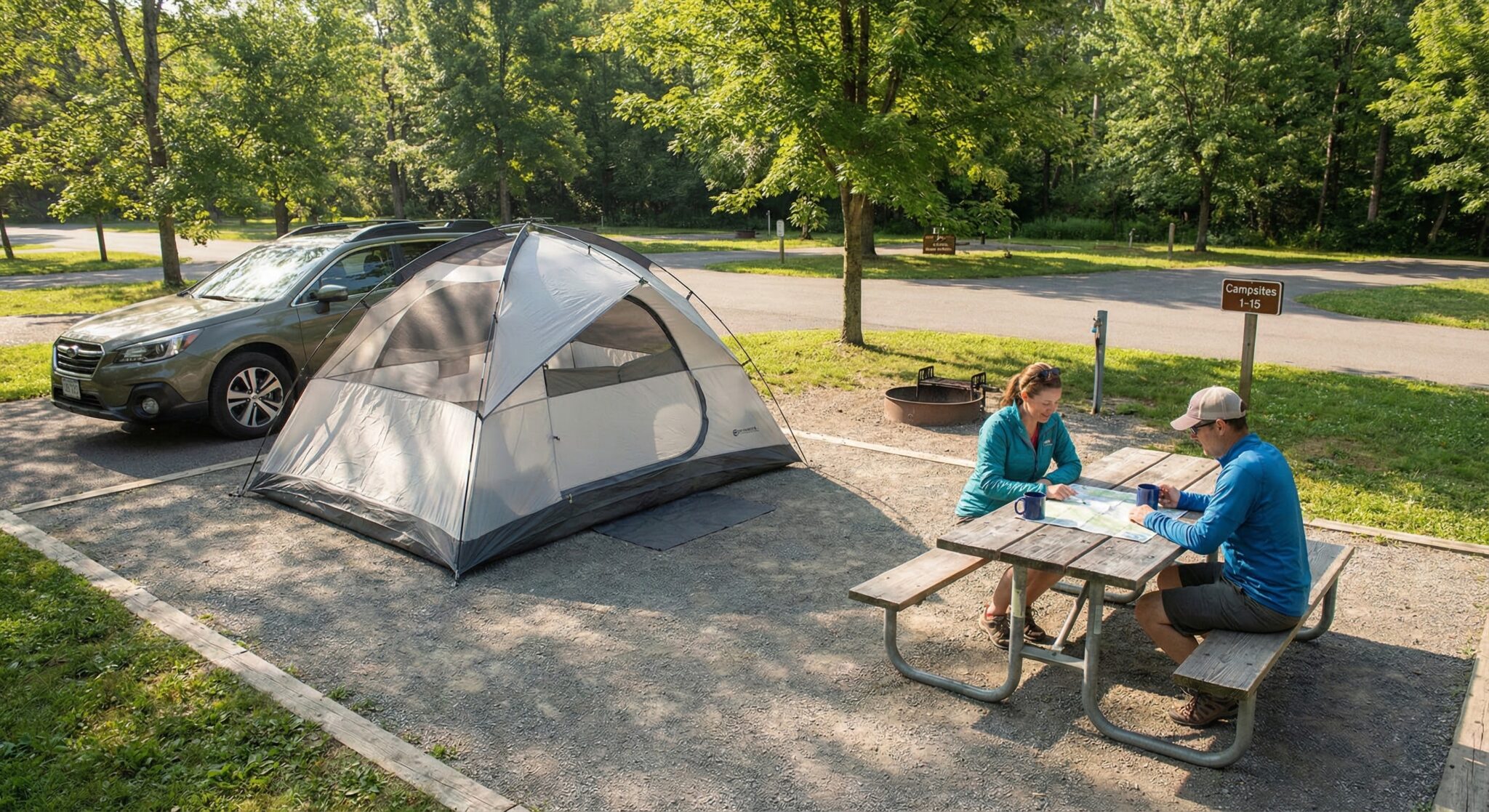
For first-time campers, designated campsites are the safest option.
Benefits include:
- Clear rules and regulations
- Flat and prepared ground
- Access to basic facilities
- Lower wildlife risks
Beginners should avoid remote or undeveloped areas until they gain experience.
Check Accessibility and Distance
Ease of access is crucial for beginners.
Consider:
- Distance from your home
- Road conditions
- Parking availability
- Walking distance to the campsite
Car-accessible locations are ideal for first camping trips.
Evaluate Safety Factors
Safety should always come first when selecting a campsite.
Key safety considerations:
- Avoid flood-prone areas
- Stay away from cliff edges
- Do not camp under dead or damaged trees
- Choose areas with good visibility
A safe campsite minimizes unexpected dangers.
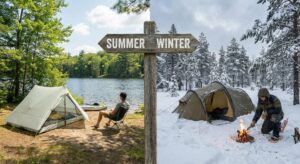
Consider Weather and Seasonal Conditions
Weather affects campsite suitability.
Important checks:
- Typical seasonal temperatures
- Wind exposure
- Rain frequency
- Shade availability
Choosing a location suited to the season improves comfort significantly.
Look for Flat and Elevated Ground
Ground conditions affect sleep quality and safety.
Good campsite ground should be:
- Flat and level
- Slightly elevated to prevent water pooling
- Free of rocks and roots
Avoid valleys where cold air and moisture collect.
Proximity to Water Sources
Water access is important but requires caution.
Best practices:
- Camp at a safe distance from lakes or rivers
- Avoid camping directly next to water
- Ensure water access without flood risk
Never camp in dry riverbeds.
Check Local Rules and Regulations
Always follow local camping regulations.
Common rules include:
- Fire restrictions
- Waste disposal requirements
- Quiet hours
- Camping permits
Ignoring rules can result in fines or unsafe conditions.
Cell Signal and Emergency Access
For beginners, communication access adds safety.
Consider:
- Mobile phone signal availability
- Proximity to emergency services
- Nearby ranger stations
Remote areas should be avoided on first trips.
Environmental Responsibility
Choosing a campsite responsibly protects nature.
Guidelines:
- Camp on durable surfaces
- Avoid damaging vegetation
- Follow “Leave No Trace” principles
Responsible site selection preserves natural environments.
Common Location Mistakes Beginners Make
Typical mistakes include:
- Choosing scenic but unsafe spots
- Ignoring weather exposure
- Camping too close to wildlife paths
- Overlooking accessibility
Awareness prevents these issues.
Frequently Asked Questions
Is wild camping suitable for beginners?
No. Designated campsites are recommended for beginners.
How far should I camp from water?
At least 60 meters (200 feet) is recommended.
Do I need permission to camp?
It depends on local laws and campsite regulations.
Conclusion
Choosing the right camping location is a foundational step for a safe and enjoyable camping experience. Beginners should prioritize safety, accessibility, and compliance with local rules over scenery or isolation.
With the right location, camping becomes comfortable, predictable, and rewarding.