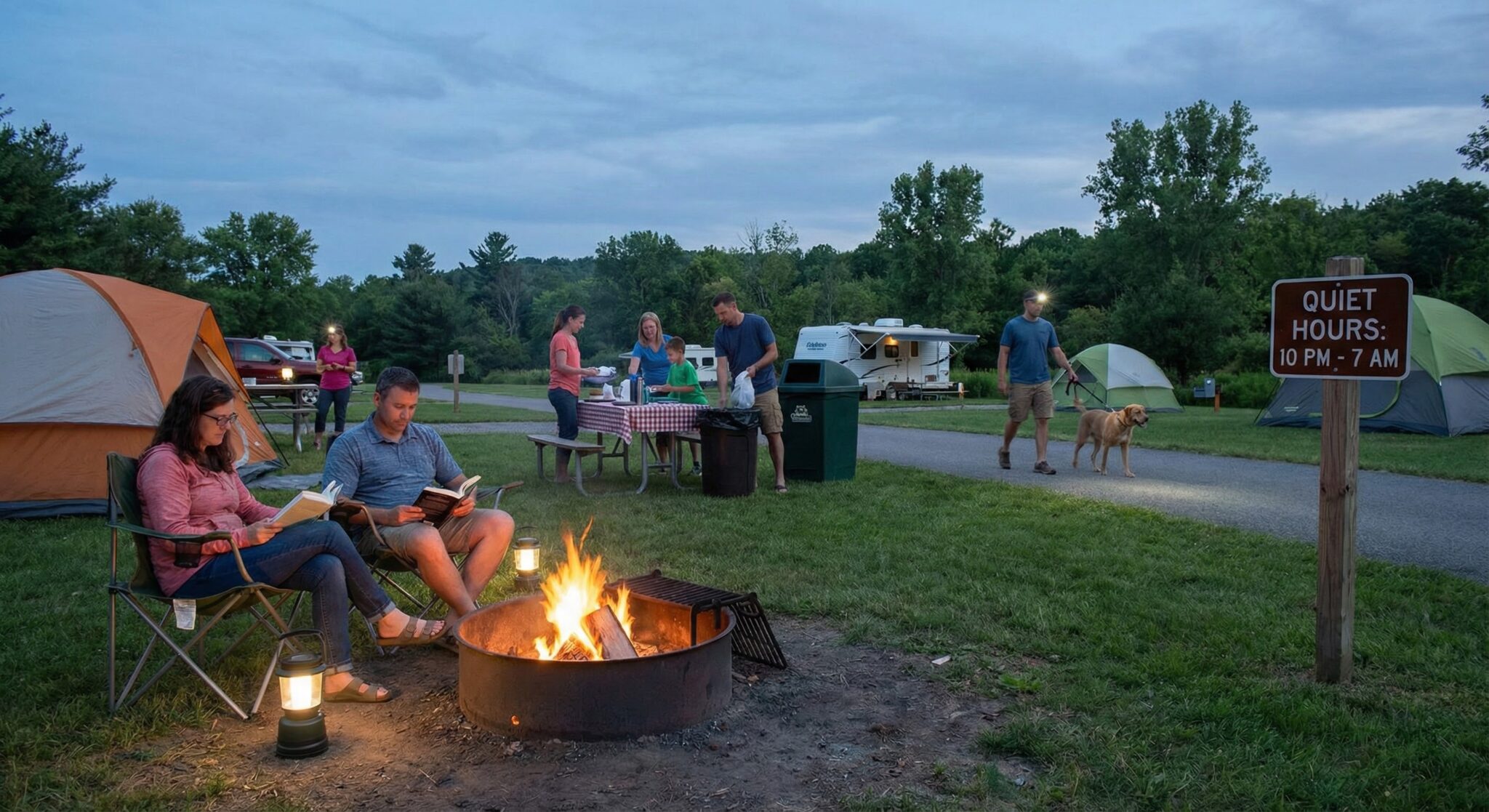
Camping is not only about enjoying nature, but also about respecting other campers and the environment. Beginners often focus on gear and preparation while overlooking camping etiquette. Understanding basic camping etiquette improves safety, comfort, and overall experience for everyone at the campsite.
This guide explains essential camping etiquette rules that every beginner should know before heading outdoors.
Why Camping Etiquette Matters
Good camping etiquette:
- Creates a positive environment
- Prevents conflicts with other campers
- Protects natural areas
- Improves overall campsite safety
Respectful behavior ensures that camping areas remain enjoyable and accessible.
Respect Quiet Hours
Most campsites have designated quiet hours.
Etiquette guidelines:
- Lower noise levels during evening and night
- Avoid loud music
- Keep conversations at reasonable volume
Respecting quiet hours allows everyone to rest comfortably.
Keep Your Campsite Clean
A clean campsite is a respectful campsite.
Best practices:
- Collect trash regularly
- Use trash bags
- Clean cooking areas after meals
- Leave the site cleaner than you found it
Cleanliness protects wildlife and enhances the experience for others.
Be Mindful of Campfires
Campfires should be enjoyed responsibly.
Do’s:
- Use designated fire pits
- Keep fires small
- Fully extinguish fires
Don’ts:
- Leave fires unattended
- Burn trash or plastic
- Ignore local fire restrictions
Responsible fire use prevents accidents and environmental damage.
Respect Wildlife and Nature
Wildlife encounters should always be handled responsibly.
Etiquette tips:
- Observe animals from a distance
- Never feed wildlife
- Store food securely
- Avoid damaging plants
Respecting wildlife protects both animals and campers.
Share Common Areas Politely
Common areas are meant for everyone.
Guidelines:
- Do not block paths or facilities
- Be patient when areas are crowded
- Respect shared resources
Courtesy helps maintain harmony at campsites.
Control Pets at Campsites
If pets are allowed, responsibility is essential.
Pet etiquette includes:
- Keeping pets leashed
- Cleaning up after pets
- Preventing excessive noise
Responsible pet behavior ensures safety and comfort for others.
Respect Campsite Boundaries
Each campsite has defined boundaries.
Etiquette rules:
- Stay within your designated area
- Avoid walking through others’ campsites
- Maintain personal space
Respecting boundaries prevents unnecessary conflict.
Use Lighting Considerately at Night
Lighting can disturb other campers.
Best practices:
- Use headlamps instead of bright lanterns
- Point lights downward
- Turn off unnecessary lights
Proper lighting improves nighttime comfort for everyone.
Follow Local Rules and Regulations
Rules exist for safety and preservation.
Always:
- Follow posted regulations
- Respect fire bans
- Observe check-in/check-out times
Ignoring rules can lead to fines or restricted access.
Common Etiquette Mistakes Beginners Make
Beginners often:
- Play loud music
- Leave trash behind
- Ignore campsite boundaries
- Misuse campfires
Awareness prevents these mistakes.
Frequently Asked Questions
Is camping etiquette really important?
Yes. Etiquette ensures safety, respect, and enjoyment for all campers.
Are etiquette rules the same everywhere?
Basic principles are similar, but local rules may vary.
What should I do if others are being disruptive?
Report issues to campsite staff rather than confronting others.
Conclusion
Camping etiquette is an essential part of responsible outdoor recreation. Beginners who understand and follow basic etiquette rules contribute to a safer, cleaner, and more enjoyable camping environment.
Respect for nature, fellow campers, and campsite rules ensures positive camping experiences for everyone.