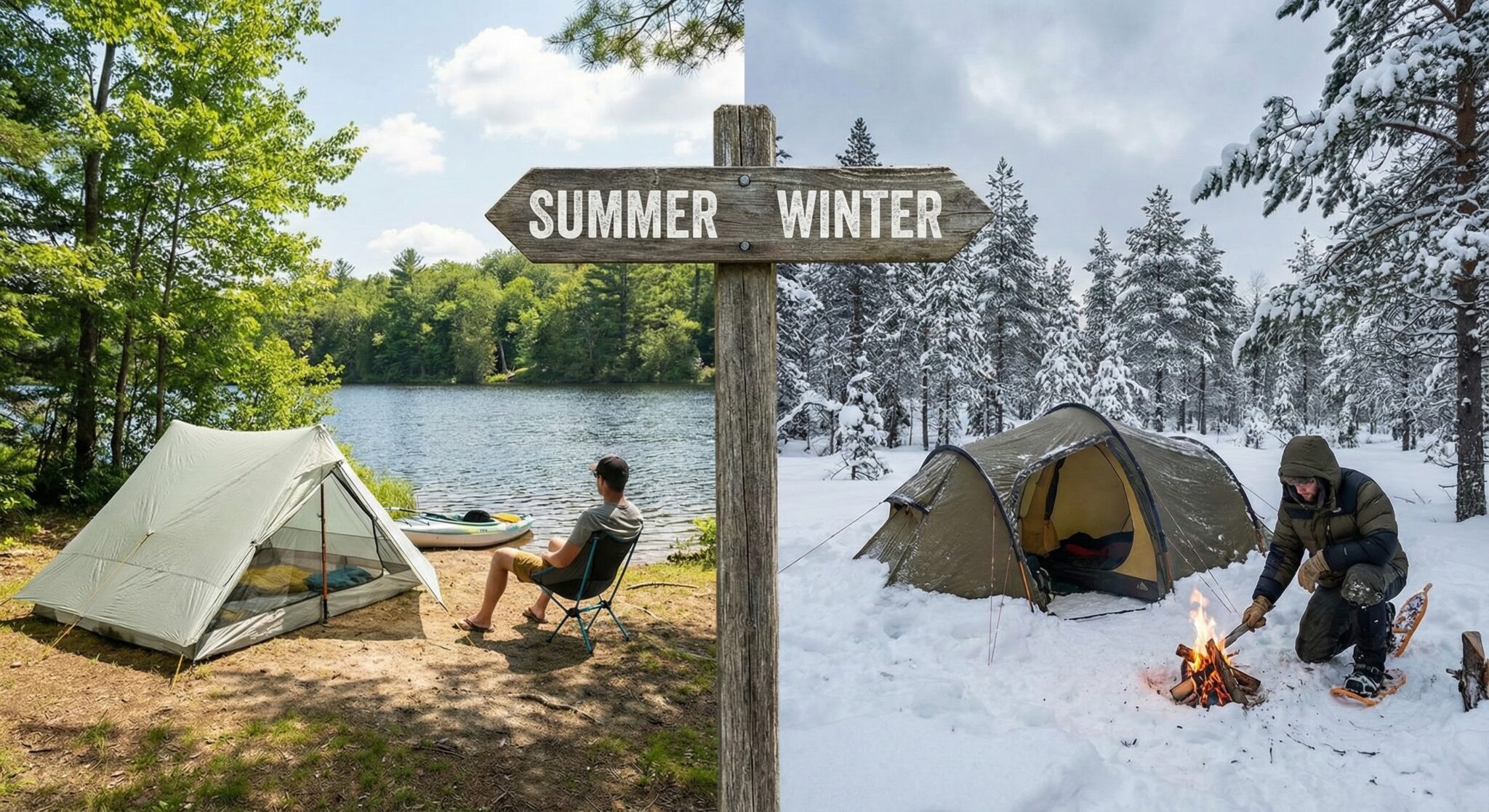
Camping can be enjoyed in every season, but summer and winter camping offer very different experiences. For beginners, understanding the key differences between summer and winter camping is essential for safety, comfort, and proper preparation.
This guide compares summer and winter camping to help beginners choose the right season and prepare accordingly.
Overview: Summer vs Winter Camping
The main differences between summer and winter camping involve:
- Weather conditions
- Required equipment
- Safety considerations
- Physical demands
- Overall comfort
Beginners typically start with summer camping due to milder conditions.
Weather Conditions
Summer Camping
- Warmer temperatures
- Longer daylight hours
- Higher risk of heat and dehydration
- Occasional storms
Winter Camping
- Cold temperatures
- Shorter daylight hours
- Snow, ice, and freezing conditions
- Greater weather unpredictability
Weather has a direct impact on gear and planning.
Clothing and Layering
Summer Clothing
- Lightweight and breathable fabrics
- Sun protection (hats, sunglasses)
- Quick-drying materials
Winter Clothing
- Insulated base layers
- Multiple insulating layers
- Waterproof outerwear
- Gloves, hats, and thermal socks
Layering becomes far more critical in winter.
Sleeping Systems
Summer Sleeping Setup
- Lightweight sleeping bags
- Basic sleeping pads
- Minimal insulation
Winter Sleeping Setup
- Cold-rated sleeping bags
- Insulated sleeping pads
- Additional blankets or liners
Heat retention is essential during winter nights.
Food and Hydration
Summer Considerations
- Higher water consumption
- Risk of food spoilage
- Preference for light meals
Winter Considerations
- Higher calorie needs
- Warm meals and drinks
- Preventing food from freezing
Nutrition planning changes with the season.
Safety Challenges
Summer Risks
- Heat exhaustion
- Sunburn
- Dehydration
- Insects
Winter Risks
- Hypothermia
- Frostbite
- Slippery terrain
- Limited emergency access
Winter camping requires significantly more caution.
Campsite Selection
Summer Campsites
- Shaded areas
- Access to water
- Ventilation
Winter Campsites
- Wind-protected areas
- Safe snow conditions
- Proximity to emergency access
Campsite selection varies greatly by season.
Gear Requirements
Summer Gear
- Basic shelter
- Lightweight clothing
- Insect protection
Winter Gear
- Specialized cold-weather equipment
- Snow stakes or anchors
- Insulated gear
Winter gear is heavier and more specialized.
Physical Demands
Summer Camping
- Less physically demanding
- Easier movement
Winter Camping
- Higher energy expenditure
- Slower travel
- Increased fatigue
Winter camping requires better physical preparation.
Which Season Is Better for Beginners?
For most beginners:
- Summer camping is recommended
- Conditions are more forgiving
- Gear requirements are simpler
- Safety risks are lower
Winter camping should only be attempted after gaining experience.
Common Beginner Mistakes
Mistakes include:
- Underestimating winter conditions
- Overpacking for summer
- Ignoring hydration needs
- Using incorrect gear
Awareness reduces seasonal risks.
Frequently Asked Questions
Can beginners camp in winter?
Yes, but only with proper experience and equipment.
Is summer camping always safe?
No. Heat and dehydration still pose risks.
Which season is cheaper for camping?
Summer camping generally requires less specialized gear.
Conclusion
Both summer and winter camping offer unique experiences, but they differ significantly in preparation, safety, and comfort. Beginners should start with summer camping to build skills and confidence before attempting winter conditions.
Understanding seasonal differences allows campers to make informed decisions and enjoy safer, more rewarding outdoor experiences.