Hygiene is often overlooked by beginner campers, yet it plays a crucial role in comfort, health, and overall enjoyment. Camping does not mean sacrificing cleanliness. With simple habits and basic supplies, staying clean outdoors is entirely possible.
This guide explains practical camping hygiene tips designed specifically for beginners.
Why Hygiene Matters While Camping
Maintaining hygiene while camping helps:
- Prevent illness and infections
- Improve comfort and confidence
- Reduce unpleasant odors
- Protect the surrounding environment
Good hygiene habits contribute to a more enjoyable and responsible camping experience.
Hand Hygiene Is Essential
Hands come into contact with many surfaces while camping.
Best practices:
- Wash hands before eating
- Wash hands after using the restroom
- Use biodegradable soap
- Carry hand sanitizer when water is unavailable
Clean hands significantly reduce the risk of illness.
Bathing and Personal Cleaning
Full showers may not be available, but basic cleaning is sufficient.
Practical solutions:
- Wet wipes or biodegradable wipes
- Small towel and water for sponge bathing
- Campsite shower facilities if available
Focus on cleanliness rather than perfection.
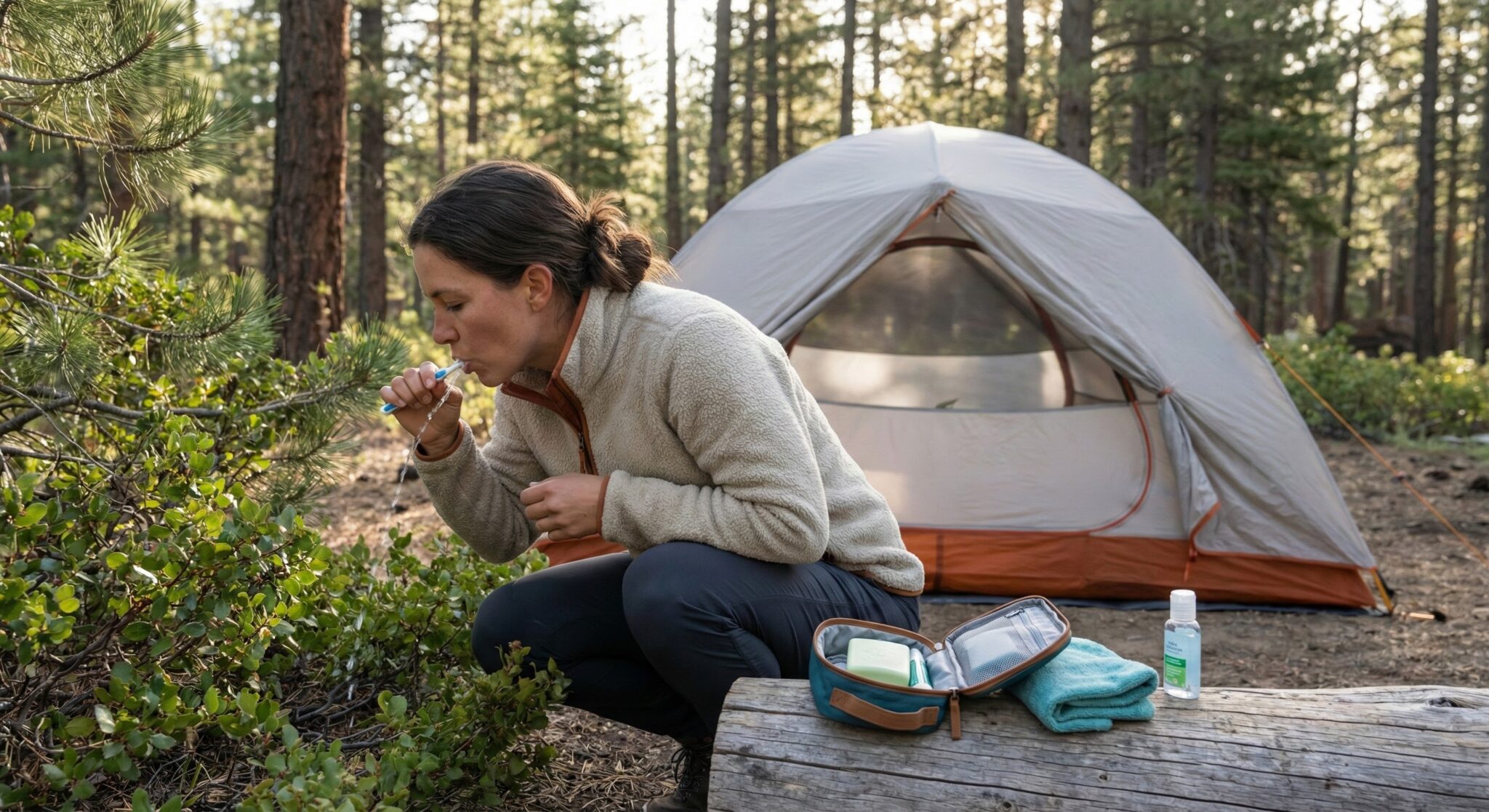
Oral Hygiene While Camping
Maintaining oral hygiene is simple but important.
Tips:
- Bring a toothbrush and toothpaste
- Use a small cup for rinsing
- Dispose of wastewater properly
Keeping up daily routines improves comfort and well-being.
Clothing Hygiene and Laundry Tips
Clean clothing helps prevent irritation and odor.
Guidelines:
- Change socks daily
- Air out clothes after use
- Separate clean and dirty clothing
- Bring an extra set of essentials
Quick-drying fabrics are ideal for camping.
Bathroom and Toilet Hygiene
Follow campsite restroom rules carefully.
If no restroom is available:
- Use designated areas if permitted
- Follow local regulations
- Carry biodegradable toilet paper
- Dispose of waste responsibly
Never leave waste behind.
Dishwashing and Cooking Hygiene
Clean cooking tools prevent contamination.
Best practices:
- Wash dishes immediately after meals
- Use minimal biodegradable soap
- Keep food preparation areas clean
Proper dish hygiene reduces foodborne risks.
Managing Trash and Waste
Waste management is part of hygiene.
Important habits:
- Use trash bags
- Seal waste properly
- Pack out trash if necessary
- Avoid leaving waste overnight
A clean campsite is safer and more comfortable.
Skin Care and Sun Protection
Outdoor exposure affects the skin.
Recommendations:
- Use sunscreen
- Wear protective clothing
- Stay hydrated
- Apply lip balm
Protecting your skin prevents discomfort and long-term damage.
Common Hygiene Mistakes Beginners Make
Beginners often:
- Skip handwashing
- Ignore clothing hygiene
- Leave trash exposed
- Use non-biodegradable products
Avoiding these mistakes improves hygiene and safety.
Frequently Asked Questions
Can I stay clean without showers?
Yes. Basic cleaning methods are sufficient for short trips.
Do I need special hygiene products?
No. Simple, travel-sized products work well.
Is biodegradable soap necessary?
Yes. It protects the environment and wildlife.
Conclusion
Camping hygiene does not need to be complicated. With basic planning, responsible habits, and simple tools, beginners can stay clean, comfortable, and healthy while enjoying the outdoors.
Good hygiene supports both personal well-being and environmental responsibility.