Staying warm at night is one of the biggest concerns for beginner campers. Even during mild seasons, temperatures can drop significantly after sunset. Without proper preparation, cold nights can disrupt sleep and negatively affect the entire camping experience.
This guide explains practical and effective ways beginners can stay warm while camping at night.
Why Camping Nights Feel Colder
Outdoor environments behave differently from urban areas.
Common reasons nights feel colder:
- Lack of buildings and insulation
- Increased humidity
- Wind exposure
- Heat loss from the ground
Understanding these factors helps campers prepare more effectively.
Choose the Right Sleeping Bag
Your sleeping bag is the most important item for warmth.
Key points to consider:
- Temperature rating suitable for the season
- Proper fit to reduce heat loss
- Insulation type (synthetic or down)
A three-season sleeping bag is ideal for most beginners.
Always Use a Sleeping Pad
Many beginners underestimate the importance of sleeping pads.
Sleeping pads:
- Insulate your body from cold ground
- Improve comfort
- Prevent heat loss through conduction
Even the warmest sleeping bag cannot compensate for direct contact with cold ground.
Dress Properly for Sleeping
What you wear to bed matters.
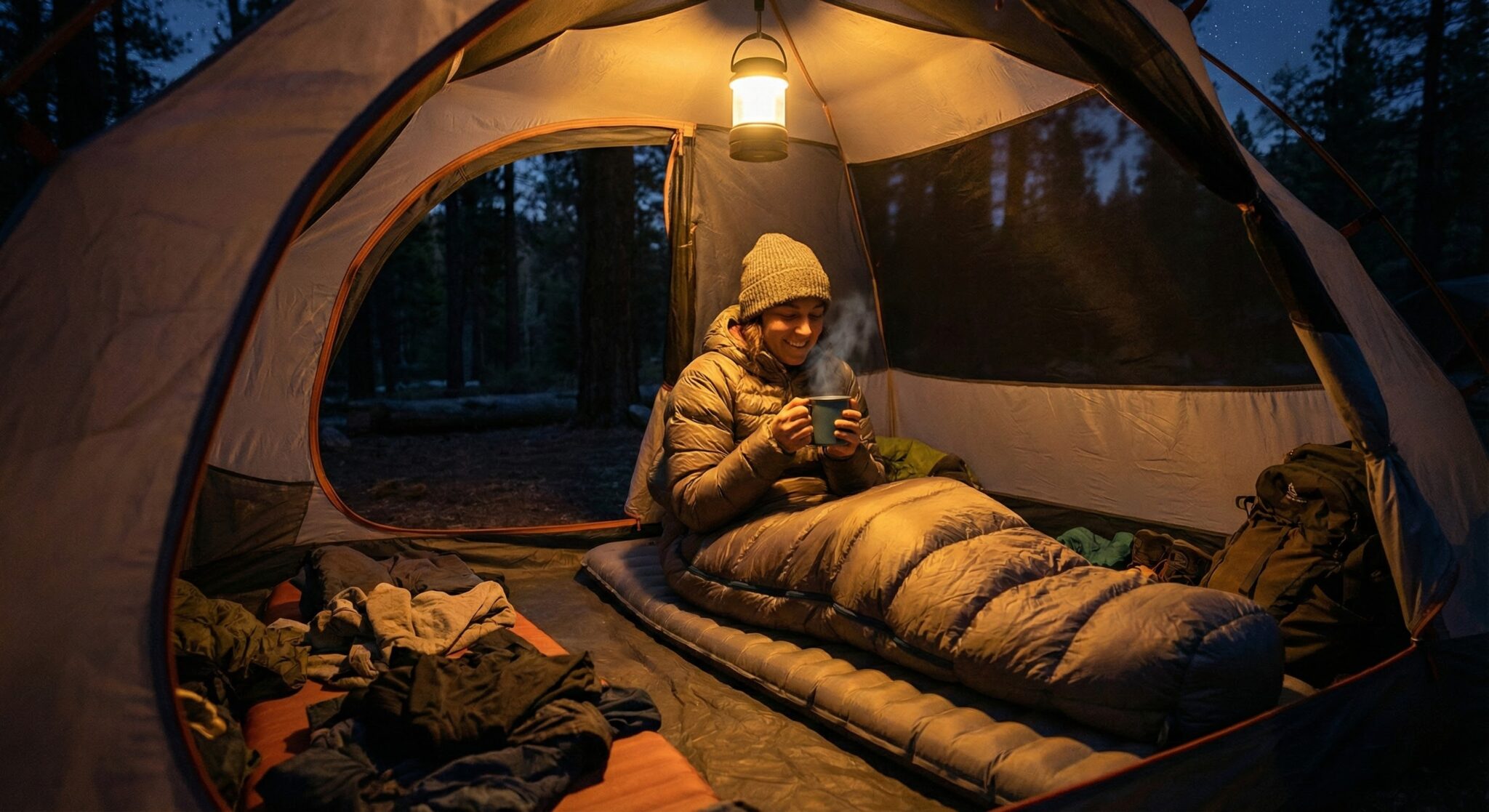
Recommended sleeping clothing:
- Clean, dry base layers
- Warm socks
- Lightweight hat or beanie
Avoid sleeping in clothes worn during the day, as moisture reduces warmth.
Eat a Warm Meal Before Sleeping
Food helps your body generate heat.
Before bedtime:
- Eat a warm, calorie-rich meal
- Drink a warm beverage if possible
Your body needs energy to maintain warmth during sleep.
Use the Right Tent Setup
Your tent setup influences heat retention.
Tips for warmth:
- Choose a sheltered campsite
- Properly secure the rainfly
- Close ventilation openings partially (without blocking airflow completely)
A well-pitched tent reduces heat loss from wind exposure.
Reduce Heat Loss Inside the Tent
Small adjustments can significantly improve warmth.
Effective methods:
- Use an insulated sleeping pad
- Keep gear inside the tent
- Use a sleeping bag liner
- Place clothing near your feet for added insulation
These techniques trap body heat more efficiently.
Avoid Common Beginner Mistakes
Many beginners unintentionally make themselves colder.
Common mistakes include:
- Sleeping directly on the ground
- Wearing damp clothing
- Using summer sleeping bags in cold conditions
- Ignoring wind direction
Avoiding these mistakes improves comfort immediately.
Use Safe Supplemental Warmth
Extra warmth can help, but safety is critical.
Safe options:
- Hot water bottle (placed inside a sock)
- Extra blankets
- Thermal liners
Never use open flames or heaters inside the tent.
Frequently Asked Questions
Is it normal to feel cold while camping at night?
Yes. Outdoor temperatures often drop at night, especially in open areas.
Can beginners camp comfortably in cold weather?
Yes, with proper gear and preparation.
Should I sleep with my head covered?
Keeping your head warm helps retain body heat, but ensure proper ventilation.
Conclusion
Staying warm while camping at night is mainly about preparation and smart choices. With the right sleeping gear, proper clothing, and a well-set campsite, even beginners can sleep comfortably outdoors.
By following these practical tips, camping nights become restful rather than challenging.