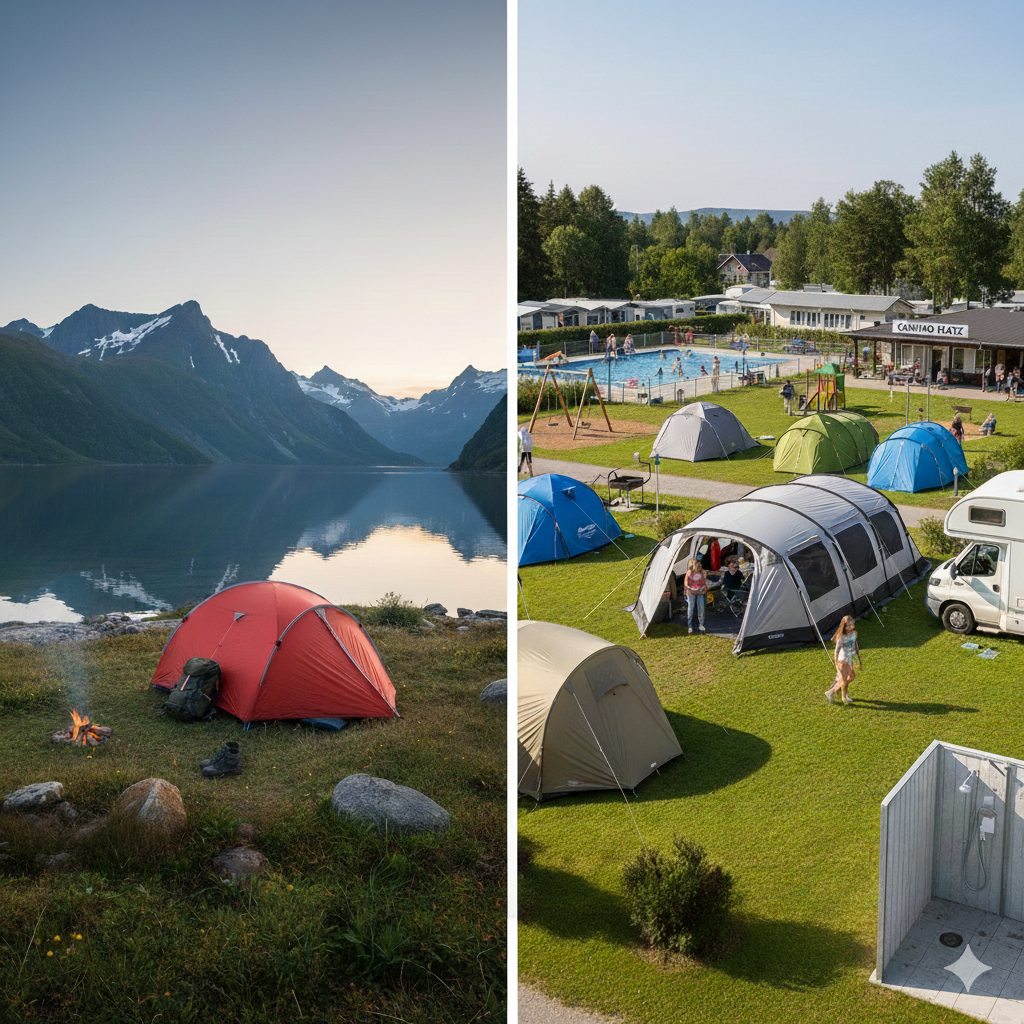
Camping in Norway vs Germany is a common comparison for travelers planning a camping trip in Europe. Planning an outdoor adventure can feel both exciting and overwhelming, especially with so many incredible destinations to choose from. Norway and Germany are often seen as two of Europe’s top camping countries. Both offer stunning landscapes, strong camping traditions, and unforgettable experiences. However, the camping experience they offer is very different.
In this guide, we compare camping in Norway vs Germany in terms of freedom, comfort, costs, seasons, and overall experience to help you decide which destination suits you best.
Camping in Norway vs Germany: Freedom or Comfort?
Camping in Norway: Ultimate Freedom in Nature
Norway is famous for its dramatic fjords, towering mountains, powerful waterfalls, and endless scenic roads. What truly makes camping in Norway unique, however, is a legal principle that outdoor enthusiasts deeply appreciate: Everyman’s Right (Allemannsretten).
This law allows everyone to enjoy nature freely, as long as it is done responsibly. As a result, camping in Norway feels far more open and unrestricted than in many other European countries.
In simple terms, this means you can camp on uncultivated land, stay up to two nights in the same place, keep a safe distance from private homes, and enjoy nature as long as you leave no trace behind. Because of this system, Norway is often mentioned in discussions about free camping rules and wild camping laws in Europe.
For many travelers, this freedom creates a unique sense of connection with nature. You can camp near lakes, forests, and mountains while enjoying silence and solitude that is hard to find elsewhere. Although paid campgrounds do exist, many people choose Norway specifically for the feeling of openness and independence.
However, this freedom comes with trade-offs. For many travelers, this means relying more on personal preparation and planning. There are fewer showers and toilets available, facilities are limited, and a strong level of self-sufficiency is required. Overall, camping in Norway is ideal for those who value remote locations, simplicity, and untouched landscapes over comfort.
Camping in Germany: Comfort, Organization, and Family-Friendly Camping
In contrast, Germany takes a more structured approach to camping. Wild camping is generally not allowed, but what Germany offers instead is some of the best camping infrastructure in Europe. The focus is clearly on comfort, organization, and well-developed facilities.
Camping in Germany feels structured, social, and predictable. Because of this, many travelers feel more relaxed when camping in Germany, especially families, beginners, and those traveling with camper vans or motorhomes. Campsites are well maintained, clean, and designed to make camping easy and enjoyable.
German campgrounds often provide modern bathrooms, hot showers, electricity connections, laundry facilities, playgrounds, and on-site restaurants or bakeries. In addition, many campsites offer organized activities, which helps create a friendly and social atmosphere.
As a result, camping in Germany is ideal for travelers who prefer comfort, clear rules, and peace of mind. You give up wild freedom, but gain convenience and reliability, a trade that many campers are happy to make.
Cost Comparison: Free Camping vs Daily Expenses
Budget plays a crucial role when planning a camping trip, and this is where the differences between Norway and Germany become very clear.
Norway: Free Camping, High Living Costs
Thanks to Everyman’s Right, camping in Norway can often be free. In practice, however, daily expenses in Norway can add up quickly. Groceries, fuel, restaurants, and ferry crossings are all relatively expensive compared to most European countries.
For this reason, Norway works best if you cook your own meals, travel slowly, and focus more on nature than paid attractions. If you are comfortable with a minimalist lifestyle and careful planning, the costs can be managed. Otherwise, expenses may rise faster than expected.
Germany: Paid Campsites, Lower Overall Costs
In Germany, most campsites charge a nightly fee. However, prices are usually reasonable, especially when compared to hotels. On the other hand, everyday expenses such as groceries and dining out are significantly more affordable than in Scandinavia.
Germany also benefits from efficient public transportation and many free or low-cost attractions. As a result, despite paid campsites, Germany often ends up being the more budget-friendly option, particularly for families and longer trips.
Best Time for Camping in Norway
The ideal camping season in Norway is from June to August. During these months, roads and mountain passes are open, temperatures are milder, and hiking trails are safer. Campsites are fully operational, and in northern regions, travelers can even experience the Midnight Sun.
However, popular areas can become crowded, mosquitoes may appear near water, and weather conditions can change quickly. Outside of summer, camping in Norway requires experience and proper equipment.
Best Time for Camping in Germany
Germany offers more flexibility throughout the year. Spring and autumn are particularly popular because of mild temperatures, fewer crowds, lower prices, and beautiful natural colors. Summer is also a great option for families, while winter camping is possible in certain regions with the right preparation.
Overall, Germany provides more seasonal options than Norway, making it suitable for a wider range of travelers.
Leave No Trace: A Shared Responsibility
No matter where you choose to camp, one principle applies everywhere: Leave No Trace. This means respecting nature, protecting wildlife, minimizing noise, and leaving each place as clean as you found it.
In Norway, this principle is especially important because wild camping is common. In Germany, it applies mainly within campgrounds and protected natural areas. Responsible camping helps preserve these destinations for future travelers.
Camping in Norway vs Germany:
So, which is better camping in Norway or Germany? Overall, the answer depends entirely on your travel style and expectations. If you are looking for raw landscapes, silence, dramatic scenery, and a true sense of freedom, Norway is the perfect choice. It suits experienced campers who are comfortable without many facilities. On the other hand, if you prefer comfort, organization, family-friendly environments, and lower daily expenses, Germany is the better option. It is ideal for road trips, beginner campers, and travelers who enjoy structured camping experiences.
Both Norway and Germany offer unforgettable camping adventures. The real question is simple: do you want wild freedom or comfortable adventure? Once you know the answer, choosing your next camping destination becomes much easier.