Choosing the right clothing is one of the most important factors for a comfortable camping experience. Beginners often underestimate how quickly weather conditions can change outdoors. Wearing inappropriate clothing can lead to discomfort, fatigue, or even health risks.
This guide explains how beginners can choose the best camping clothing for different weather conditions using practical and easy-to-follow principles.
Why Clothing Matters When Camping
Camping clothing is not about style—it is about protection and functionality.
Proper clothing helps you:
- Regulate body temperature
- Stay dry and comfortable
- Protect against wind, sun, and insects
- Move freely during outdoor activities
Layering and material selection are far more important than brand names.
The Layering System Explained
The most effective way to dress for camping is using a layering system.
Base Layer
- Worn directly against the skin
- Manages moisture and sweat
- Should be breathable and quick-drying
Avoid cotton. Synthetic fabrics or merino wool are better choices.
Mid Layer
- Provides insulation
- Traps body heat
Examples include fleece jackets or lightweight insulated tops.
Outer Layer
- Protects against wind, rain, and snow
- Should be waterproof or water-resistant
A good outer layer shields you from harsh weather conditions.
Clothing for Warm Weather Camping
Hot weather requires breathable and lightweight clothing.
Recommended items:
- Lightweight long-sleeve shirts
- Quick-drying pants or shorts
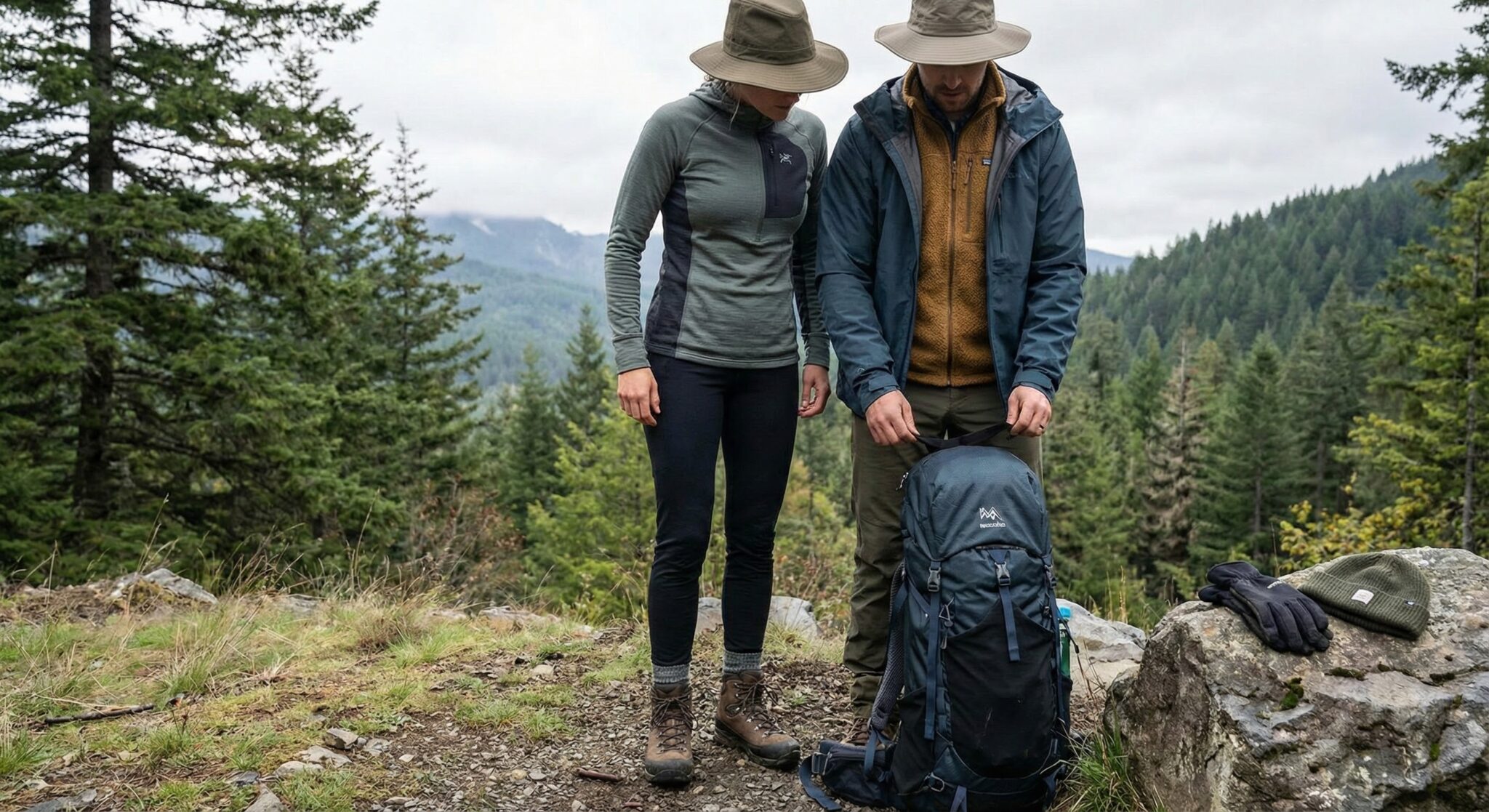
- Wide-brim hat or cap
- UV-protective sunglasses
Long sleeves may seem counterintuitive but protect against sunburn and insects.
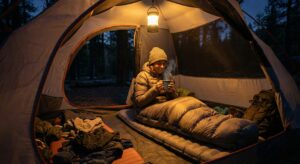
Clothing for Cold Weather Camping
Cold conditions demand proper insulation.
Essential cold-weather clothing:
- Thermal base layers
- Insulating mid layers
- Insulated jacket
- Warm socks
- Gloves and beanie
Even summer nights can feel cold in outdoor environments.
Clothing for Rainy Conditions
Staying dry is critical for comfort and safety.
Rain-ready clothing includes:
- Waterproof jacket
- Rain pants
- Water-resistant footwear
- Quick-drying socks
Always carry rain protection, regardless of the forecast.
Footwear Selection for Camping
Shoes directly affect mobility and comfort.
Beginner-friendly footwear:
- Hiking shoes or boots
- Comfortable camp shoes or sandals
Footwear should be broken in before the trip to prevent blisters.
Accessories That Improve Comfort
Small accessories can make a big difference.
Useful accessories:
- Neck gaiter or scarf
- Lightweight gloves
- Extra socks
- Insect-repellent clothing
These items add flexibility to your clothing system.
Common Clothing Mistakes Beginners Make
New campers often make these mistakes:
- Wearing cotton clothing
- Packing too few warm layers
- Ignoring rain protection
- Choosing fashion over function
Avoiding these mistakes improves comfort and safety.
How to Pack Clothing Efficiently
Efficient packing saves space and time.
Tips:
- Roll clothing instead of folding
- Use packing cubes
- Separate wet and dry items
- Pack one extra set of essentials
Organization reduces stress during the trip.
Frequently Asked Questions
Can I wear regular clothes while camping?
Yes, as long as they are functional, breathable, and weather-appropriate.
Do I need expensive outdoor clothing?
No. Affordable, functional clothing works well for beginners.
How many outfits should I bring?
One set per day plus one extra set is usually sufficient.
Conclusion
Choosing the right camping clothing is about preparation, not expense. Understanding weather conditions, using a proper layering system, and selecting functional materials help beginners stay comfortable in any environment.
With the right clothing choices, camping becomes more enjoyable, safer, and stress-free.