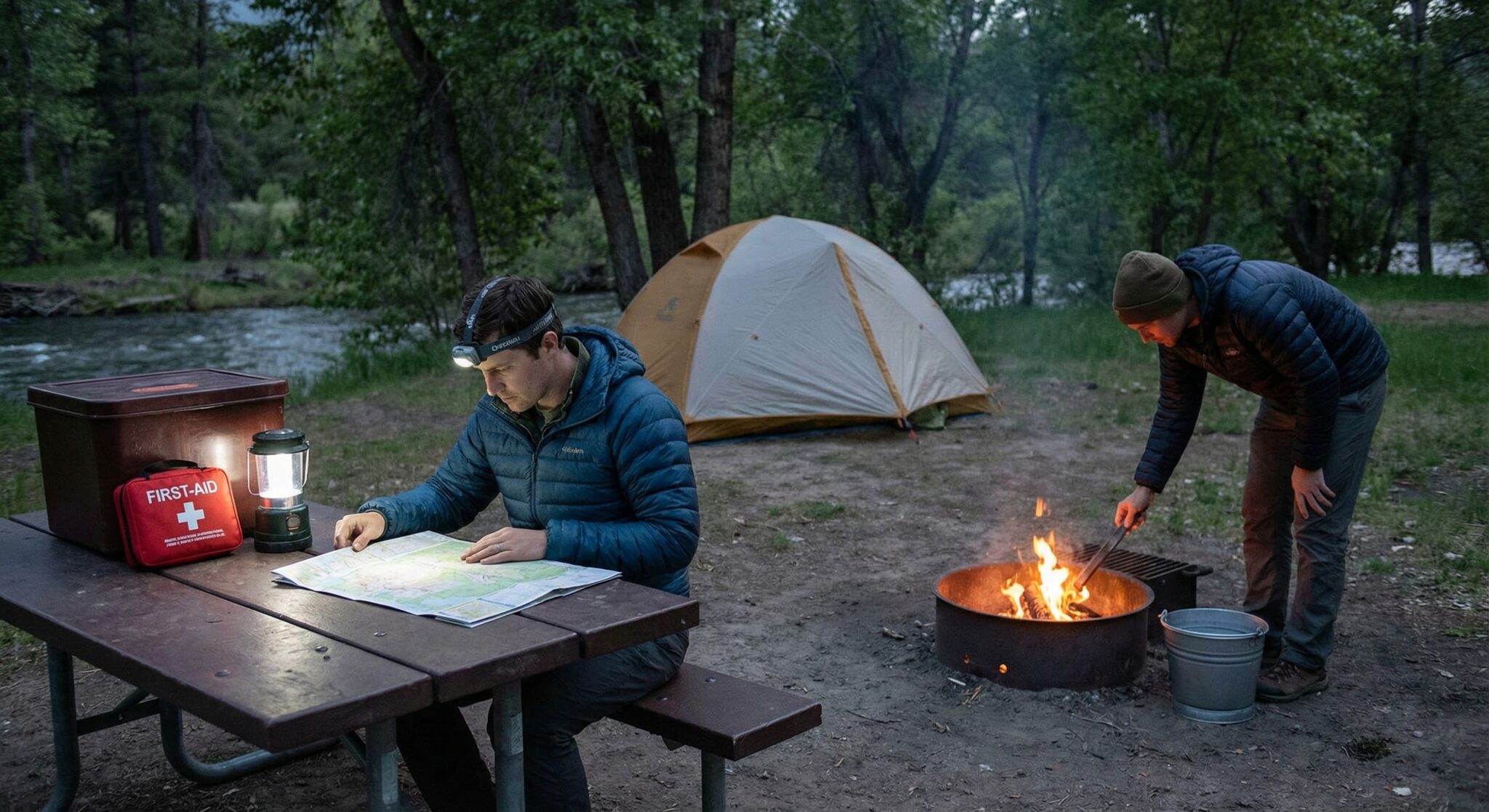
Camping is a rewarding way to enjoy nature, but safety should always be a top priority—especially for beginners. Most camping-related problems occur not because nature is dangerous, but because people are unprepared. With basic safety awareness and proper planning, camping can be both safe and enjoyable.
This guide outlines essential camping safety tips every beginner should know before heading outdoors.
Understand Your Environment
Before arriving at a campsite, it is important to understand where you are going.
Key points to research:
- Terrain and elevation
- Weather patterns
- Local wildlife
- Campsite rules and regulations
Knowing your environment helps you avoid unnecessary risks.
Check the Weather Carefully
Weather conditions can change rapidly outdoors.
Before and during your trip:
- Monitor weather forecasts regularly
- Prepare for rain, wind, and temperature drops
- Avoid camping during severe weather warnings
Always bring weather-appropriate clothing and shelter.
Choose a Safe Campsite Location
Selecting the right campsite greatly improves safety.
Choose areas that:
- Are flat and elevated
- Are not directly next to water sources
- Are sheltered from strong winds
- Have clear ground free of rocks and branches
Avoid setting up camp in dry riverbeds or under dead trees.
Practice Proper Fire Safety
Campfires can be useful but also dangerous if not handled correctly.
Fire safety tips:
- Follow campsite fire regulations
- Never leave a fire unattended
- Keep water or sand nearby
- Fully extinguish fires before sleeping or leaving
Improper fire handling is one of the most common camping hazards.
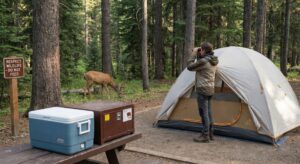
Store Food Securely
Food attracts animals, even in seemingly safe areas.
Best practices:
- Store food in sealed containers
- Keep food away from sleeping areas
- Dispose of food waste properly
- Never leave food out overnight
These precautions help prevent unwanted wildlife encounters.
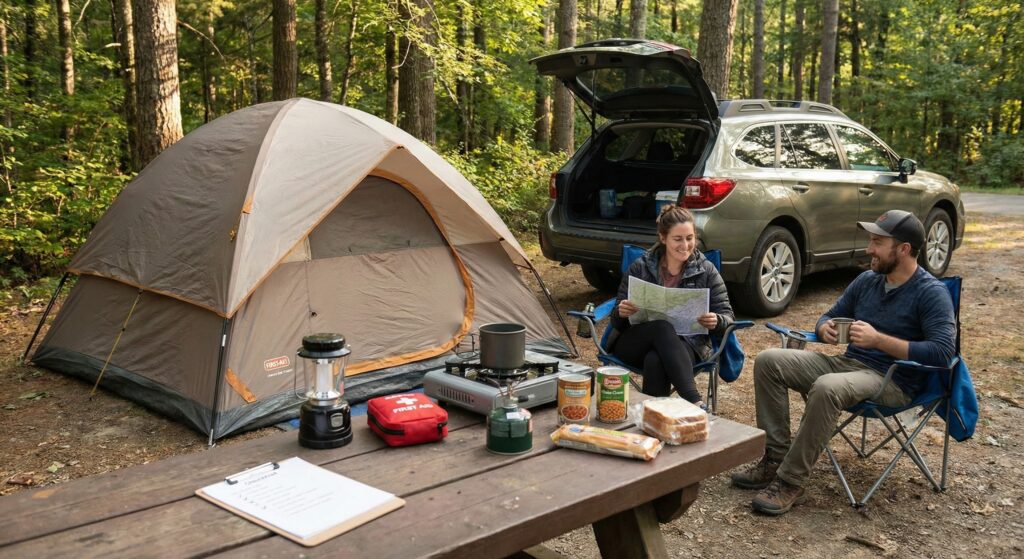
Carry a Basic First Aid Kit
Accidents can happen anywhere, including campsites.
A beginner-friendly first aid kit should include:
- Bandages and antiseptic wipes
- Pain relievers
- Personal medications
- Tweezers and blister care
- Emergency contact information
Basic medical preparedness improves confidence and safety.
Stay Aware of Your Surroundings
Situational awareness is essential while camping.
Important habits:
- Know where exits and paths are
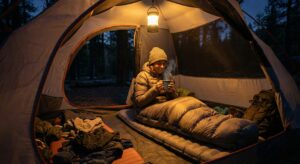
- Keep a flashlight accessible at night
- Listen for unusual sounds
- Avoid wandering far from camp after dark
Awareness helps prevent accidents and disorientation.
Manage Lighting and Visibility
Poor visibility increases the risk of injury.
Lighting recommendations:
- Headlamp for hands-free movement
- Lantern for campsite illumination
- Backup batteries or power source
Good lighting is especially important at night.
Let Someone Know Your Plans
Always inform someone about your camping trip.
Share:
- Location of the campsite
- Duration of the trip
- Expected return time
This step is critical in case of emergencies.
Respect Wildlife and Nature
Wild animals should never be approached or fed.
Safety rules:
- Observe wildlife from a distance
- Do not disturb animals or plants
- Keep noise levels reasonable
Respecting nature ensures safety for both campers and wildlife.
Frequently Asked Questions
Is camping safe for beginners?
Yes, when proper preparation and safety measures are followed.
Should beginners camp alone?
Group camping is recommended for first-time campers.
Do I need special safety equipment?
Basic safety gear and awareness are sufficient for beginners.
Conclusion
Camping safety starts with preparation, awareness, and responsible behavior. Beginners who understand their environment, follow basic safety rules, and plan ahead significantly reduce risks.
With these camping safety tips, first-time campers can enjoy nature with confidence and peace of mind.