Food plays a major role in how enjoyable a camping trip feels. For beginners, complicated meal plans can quickly become frustrating. The best approach is to focus on simple, practical, and energy-rich meals that are easy to prepare outdoors.
This guide provides easy camping food ideas designed specifically for beginners who want stress-free and satisfying meals while camping.
Why Simple Meals Are Best for Camping
Outdoor cooking is very different from cooking at home.
Simple meals:
- Require fewer ingredients
- Reduce preparation time
- Minimize cleanup
- Lower the risk of mistakes
For beginners, simplicity leads to a better overall experience.
Breakfast Ideas for Camping
Breakfast should provide energy for the day ahead.
Easy breakfast options:
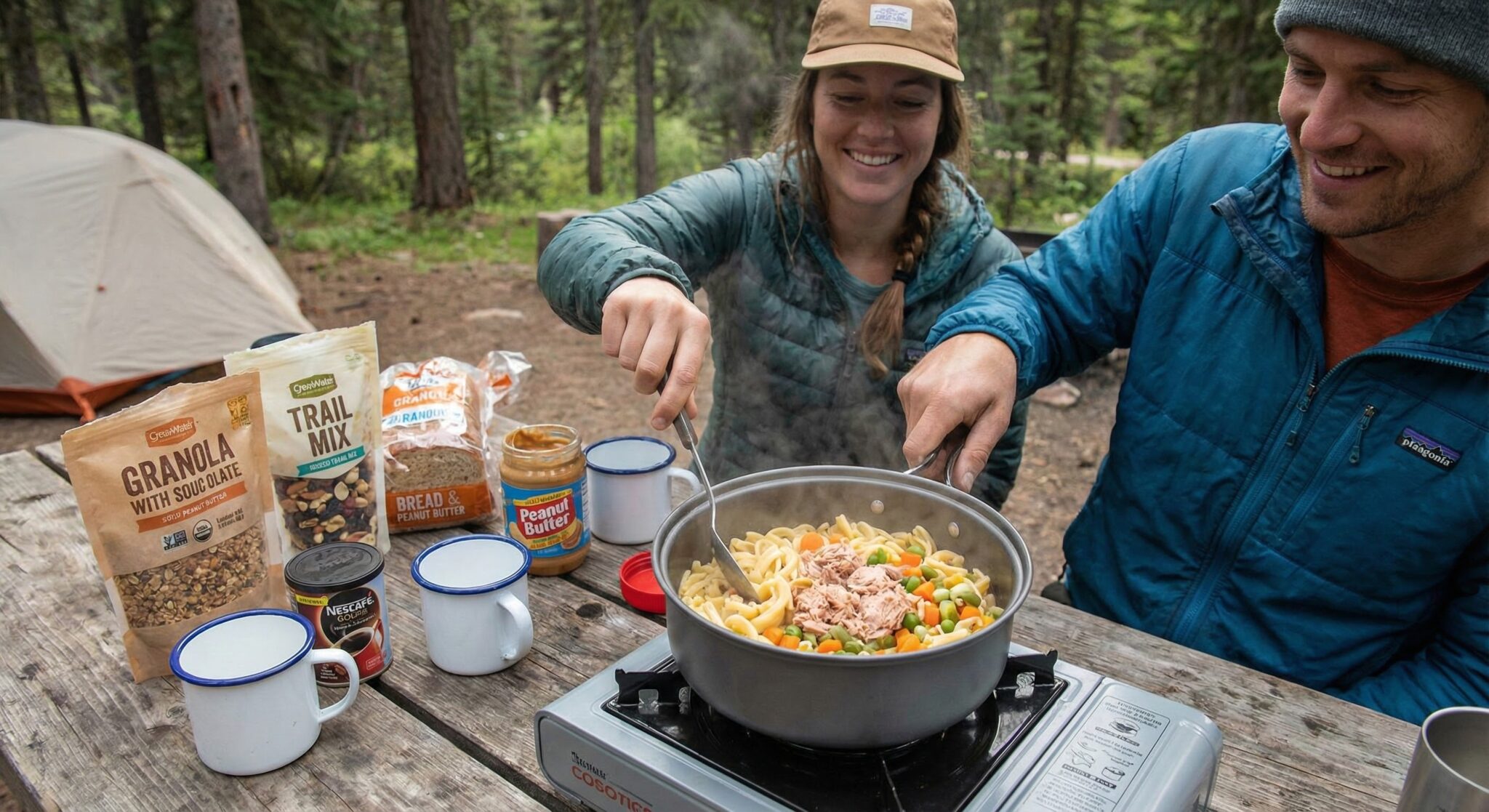
- Instant oatmeal
- Granola with powdered milk
- Peanut butter and bread
- Ready-made breakfast bars
- Boiled eggs (prepared in advance)
Warm breakfasts help maintain energy levels in cooler mornings.
Lunch Ideas for Camping
Lunch should be quick and convenient.
Practical lunch ideas:
- Wraps with canned tuna or chicken
- Ready-to-eat sandwiches
- Crackers with cheese or spreads
- Trail mix and dried fruit
Lunch meals should require little or no cooking.
Dinner Ideas for Camping
Dinner is often the main meal of the day.
Beginner-friendly dinner options:
- One-pot pasta meals
- Instant rice with canned vegetables
- Dehydrated camping meals
- Soup packets
- Grilled vegetables (where allowed)
Meals that use one pot or pan reduce cleanup effort.
Snacks and Energy Foods
Snacks are essential between meals.
Good camping snacks include:
- Nuts and seeds
- Energy bars
- Dried fruit
- Chocolate (weather permitting)
- Crackers
Snacks help maintain energy during hiking or activities.
Drinks and Hydration
Staying hydrated is critical while camping.
Recommended drinks:
- Drinking water
- Herbal tea or instant coffee
- Electrolyte drink mixes
Always carry enough water or have a reliable purification method.
Food Storage and Safety
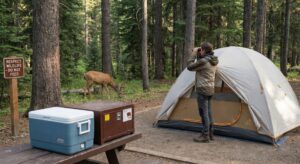
Proper food storage prevents spoilage and wildlife issues.
Safety tips:
- Use sealed containers
- Keep food away from sleeping areas
- Store trash securely
- Never leave food out overnight
Food safety is just as important outdoors as it is at home.
Cooking Equipment Basics
Beginners do not need advanced cooking gear.
Essential equipment:
- Portable camping stove
- Fuel canisters
- Lightweight cookware
- Utensils and cutting tool
Minimal equipment simplifies cooking and packing.
Common Food Mistakes Beginners Make
Typical mistakes include:
- Bringing complex recipes
- Underestimating food quantities
- Forgetting cooking tools
- Ignoring food storage rules
Planning simple meals avoids most issues.
Frequently Asked Questions
Do I need a camping stove?
Yes. A basic camping stove makes food preparation easier and safer.
Can I bring fresh food?
Yes, but only for short trips and with proper storage.
How much food should I bring?
Plan meals plus one extra portion for emergencies.
Conclusion
Camping food does not need to be complicated to be enjoyable. By choosing easy and practical meals, beginners can focus on enjoying nature rather than managing complex cooking tasks.
Simple planning, safe storage, and basic equipment are the keys to successful camping meals.