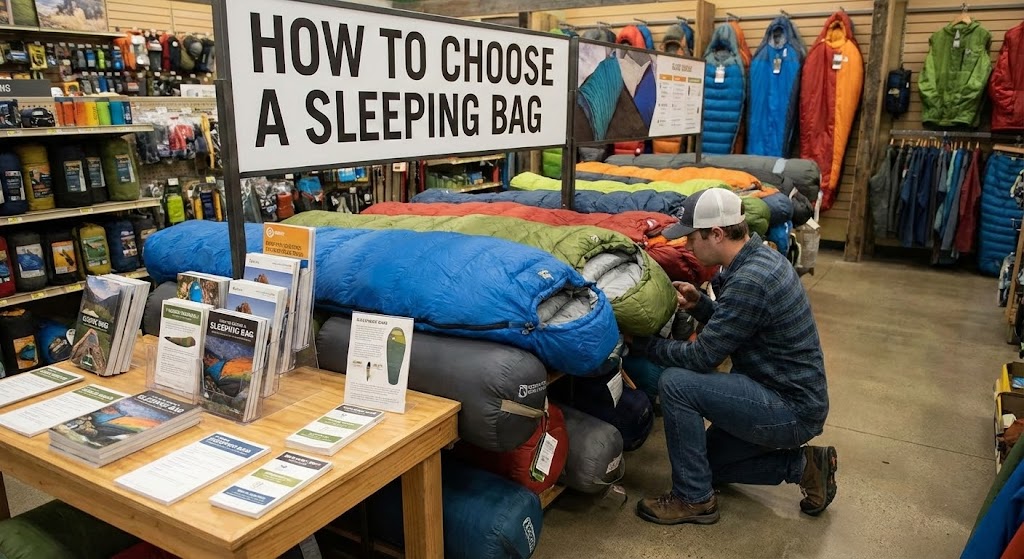
Choosing the right sleeping bag is essential for a comfortable and safe camping experience. For beginners, sleeping bags can be confusing due to different temperature ratings, materials, and shapes. Selecting the wrong one may lead to cold nights, poor sleep, and an unpleasant trip.
This guide explains how beginners can choose the right sleeping bag for camping using simple, practical criteria.
Why a Good Sleeping Bag Matters
A sleeping bag is your primary source of warmth while camping. Even in mild weather, nighttime temperatures can drop significantly.
A suitable sleeping bag helps:
- Maintain body heat
- Improve sleep quality
- Protect against cold and moisture
- Reduce fatigue during outdoor activities
Comfortable sleep directly affects your overall camping experience.
Understanding Sleeping Bag Temperature Ratings
Temperature ratings indicate the lowest temperature at which a sleeping bag can keep you warm.
Common ratings explained:
- Summer bags: Suitable for warm nights
- Three-season bags: Designed for spring, summer, and fall
- Winter bags: Built for extreme cold conditions
For beginners, a three-season sleeping bag is the most versatile and recommended choice.
Sleeping Bag Shapes and Their Differences
Sleeping bags come in different shapes, each offering distinct advantages.
Rectangular Sleeping Bags
- Spacious and comfortable
- Allow more movement
- Less efficient at retaining heat
Mummy Sleeping Bags
- Tapered shape for better heat retention
- Lightweight and compact
- Ideal for cooler conditions
Beginners who value warmth should consider mummy-style sleeping bags.
Insulation Types: Synthetic vs Down
Insulation affects warmth, weight, and performance.
Synthetic Insulation
- Performs well in wet conditions
- Dries quickly
- Generally more affordable
Down Insulation
- Lightweight and highly compressible
- Excellent warmth-to-weight ratio
- Less effective when wet
For beginners, synthetic insulation is often the safer and more practical option.
Choosing the Right Size
A sleeping bag should match your body size.
Consider the following:
- Your height
- Shoulder width
- Whether you prefer extra space
A bag that is too large loses heat, while one that is too small feels restrictive.
Comfort Features to Look For
Certain features improve comfort and usability.
Useful features include:
- Hood with drawstrings
- Draft collar or draft tube
- Smooth, durable zippers
- Inner pockets for small items
These details make a noticeable difference, especially for beginners.
Sleeping Pads and Their Importance
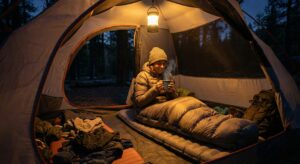
A sleeping bag alone is not enough for insulation.
Sleeping pads:
- Provide insulation from cold ground
- Improve comfort
- Prevent heat loss
Using a sleeping pad is essential, even in warm conditions.
Common Mistakes Beginners Make
New campers often make these mistakes when choosing a sleeping bag:
- Ignoring temperature ratings
- Choosing based on price only
- Skipping a sleeping pad
- Not testing the bag beforehand
Avoiding these mistakes ensures better comfort and safety.
How to Care for Your Sleeping Bag
Proper care extends the life of your sleeping bag.
Basic care tips:
- Store it uncompressed
- Air it out after trips
- Clean according to manufacturer instructions
- Keep it dry during use
Good maintenance preserves insulation performance.
Frequently Asked Questions
Do I need a winter sleeping bag as a beginner?
No. A three-season sleeping bag is sufficient for most beginners.
Can one sleeping bag be used year-round?
Yes, with proper layering and conditions.
Is an expensive sleeping bag necessary?
No. Mid-range sleeping bags are adequate for beginners.
Conclusion
Choosing the right sleeping bag is a crucial step toward a successful camping experience. Beginners should focus on temperature rating, insulation type, shape, and comfort rather than advanced features.
With the right sleeping bag and proper preparation, camping nights become warm, restful, and enjoyable.